
Hello, fellows, I hope all of you are having fun in your life. In today’s tutorial, we will have a look at types of PCB boards. Nowadays, PCBs play a very important role in the electronic and electrical industries. Almost every circuit in a device consists of a PCB. It stands for Printed Circuit Board. This circuit board is manufactured with glass fiber, epoxy, or some other related material. At this circuit board, there are numerous paths through which different components and circuits are constructed. There are 2 different techniques that are used for the connection of components on this circuit board. The first one is surface-mounted, and the second is through-hole technology.
PCB is not only part of our electronics industry, like computers, mobiles, laptops, and other devices that use PCB for their construction, but it is also used in the medical industry, such as X-ray machines and CT-scan machines, which also consist of this board. It also plays a very important role in industries used in different machines, like thicker copper printed circuit boards, which are in different motor control circuitry and battery charging devices. In today’s post, we will have a look at its different types, working, and practical use. So let’s get started with the types of PCB boards.
Types of PCB Board
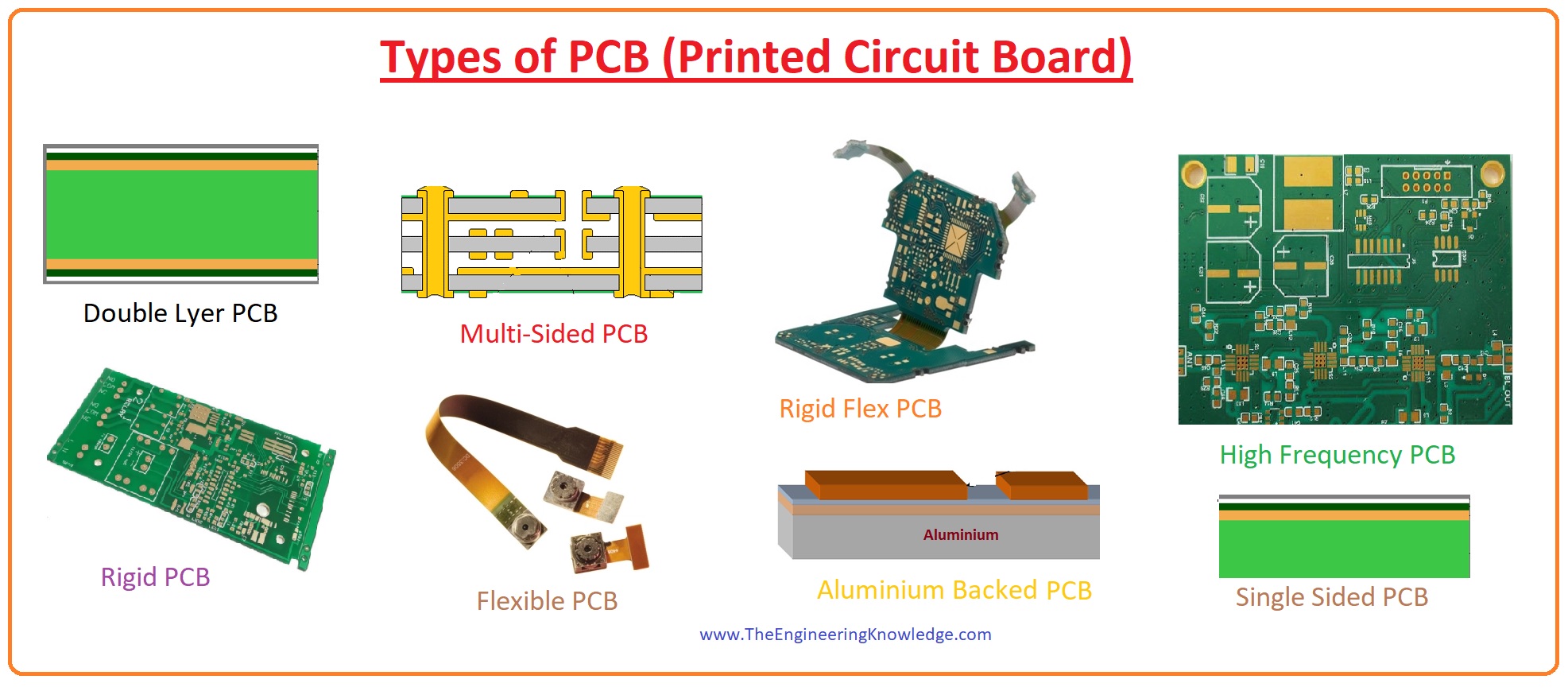
According to the construction techniques and uses, there are numerous types of printed circuit boards that are listed here.
- Aluminum PCB (Printed Circuit Board)
- Multilayer PCB (Printed Circuit Board)
- Rigid PCB (Printed Circuit Board)
- Flex PCB (Printed Circuit Board)
- High Frequency PCB (Printed Circuit Board)
- Single Sided PCB (Printed Circuit Board)
- Rigid-Flex PCB (Printed Circuit Board)
- Double sided PCB (Printed Circuit Board)
- Let’s discuss all these types in detail.
Single-Layer PCB
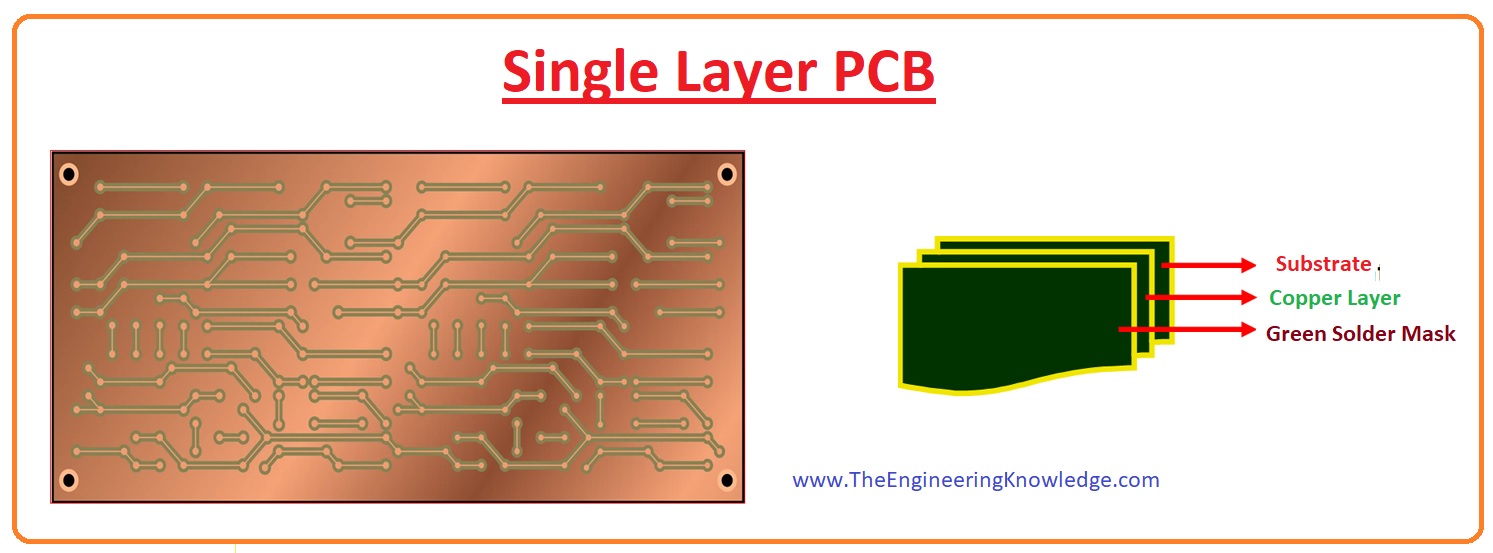
This category of the printed circuit board has only one layer of subsequent material.
The side of this substance covering of metallic copper is used mostly due to its high conductive behavior.
For safety, a solder mask is employed on the metallic coating.
After that, the marking of the solder mask for marking of different components, silk-screen, is exiting.
This category of a printed circuit board is very easy to use due to simple construction for beginners who want to make new projects.
Its price is very low and can be easily available in the market.
Due to easy access and lower price, it is mostly used in different electronic modules like calculators, printers, etc.
Double-Layer PCB
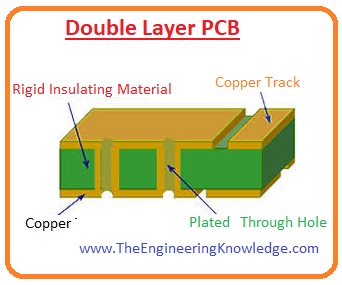
The physical construction of this category of PCB is similar to single-sided PCB, but the difference is that in this PCB metallic (coating) exists at both sides of the base substance.
On both sides of this PCB, circuits can be constructed.
On the surface of this PCB, there are holes at different locations for the connection of one-sided components to other side elements.
There are 3 methods for assembling different components on this circuit board, but one is used at a time. The first one is through-hole technology, and the second one is surface-mount technology.
The through-hole technique uses a different wiring system for the connection of components, but a surface-mounted wire is not used.
The surface-mount technique has the ability to construct large numbers of circuits with less space; it means this technology provides less weight and large no of circuits on a single board than the through-hole method.
This type of PCB is used in different light-emitting diodes, amplification circuits, HVAC (heating, ventilation, and air conditioning) systems, etc.
Multi-layer PCB
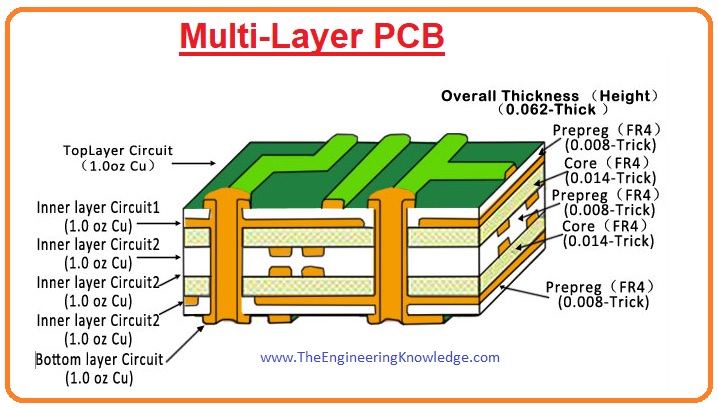
This category of circuit board comprises 3 or more double-sided printed circuit boards.
The circuit boards are linked with one another by special material, and there are some types of insulators among them to avoid heat transfer between them.
This PCB exits in different layers; the number of smaller PCBs is 4-sided, and larger ones can have 10 or 12 sides (layers).
A large number of layers is very useful for complicated circuitry, making it effective for different industrial applications where a single-sided PCB use can increase cost and require large space for circuit construction, while in a multilayer it can be done on a single board.
Another benefit of this structure is that it reduces the electromagnetic interference among different circuits.
GPS (Global Positioning System), satellite, data storage device, and weather analyzing system are common applications of this board.
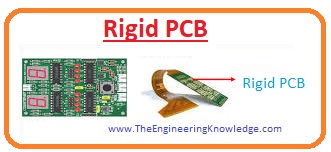
Rigid PCB
This category of circuit board is manufactured from such a substance that it does not change its physical state when some stress is applied to it.
The simplest example of a PCB is the motherboard of your personal computer.
It (motherboard) is such a circuit board that provides at the same time, current for input to all components and circuits assembled on it, like random access memory (RAM) and central processing unit (CPU).
This type of PCB board has a number of layers according to circuitry requirements; it is available in one-layer to ten-layer structures.
Flexible PCB
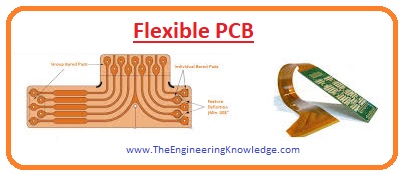
This category of circuit board is manufactured by such substances that can easily transform into other shapes according to circuitry requirements, mostly plastic used for this PCB.
This circuit board is also available in more than one layer according to the user’s requirements.
Due to the special construction of the flexible substance, it has a high cost for its assembly.
Irrespective of the high cost, it provides some benefits over rigid boards. The main advantage of it that makes it effective is its flexibility.
Its flexible behavior can decrease expenses and provide lighter circuits over a rigid PCB board.
For protection from environmental conditions, like high temperature, water, and corrosion, it is coated with materials that provide protection from damage.
Flex-Rigid PCB
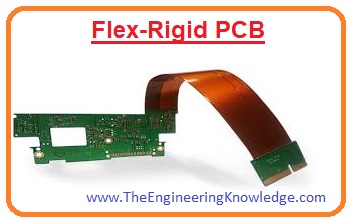
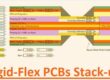
- These PCBs are assembled when flexible and rigid PCBs are combined with each other. This board provides both features of flexible and rigid.
- Due to its dual behavior in some special cases, it is preferred over other single- or double-sided circuit boards.
- There is a need for less space for circuit assembly on this board due to this feature, it is used in cell phones, cameras, and automobiles.
- There is a need for less space for circuit assembly on this board due to this feature it used in cell phones, cameras, and automobiles.
High-Frequency PCB
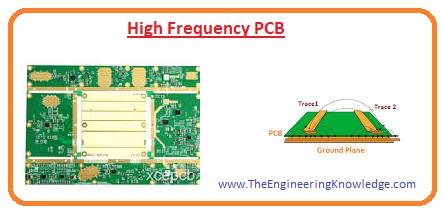
This type of PCB is different from other types in construction; it can also send a signal of frequency larger than one gigahertz.
This circuit board is manufactured by the PPO (polyphenylene oxide) and Teflon.
The price of Teflon is high, which increases the price too. Teflon is expensive due to its dielectric constant.
Before selecting this category of circuit board, you must note some factors like the dielectric constant, its power dissipation, and the thickness of the dielectric.
The most significant fact to be noted is the dielectric constant; if it varies, it causes variation in the impedance. This variation affects the digital signal very seriously and also disturbs the performance of the complete signal.
If this PCB is employed in humid conditions, then its dielectric constant also decreases.
For the construction of this PCB, it always uses a substance that is resistant to environmental conditions.
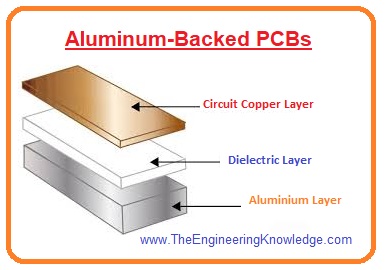
Aluminum-Backed PCBs
This type of circuit board is manufactured in a similar fashion to a copper PCB assembly.
But the difference is that, like other PCBs, it does not use glass fiber for its construction but uses aluminum or copper.
This module is attached with an insulator that provides less heat transfer from its backing.
This type of PCB is more common than other PCBs and provides lots of benefits of fiberglass material.
As we are familiar with, aluminum is abundant on Earth; almost 8.23 percent of the Earth is aluminum. So its cost is very less than, making the production of PCB cost-effective also.
The most usage of aluminum for PCB construction is due to its environmentally friendly behavior, as it can be very easily recycled and is not hazardous for the environment.
The operating life of aluminum is larger than other ceramic and glass fiber materials, so it is most preferred.
So, friends, these are common types of PCB I have mentioned. I have explained each type in detail if you have any query ask in the comments. Thanks for reading. See you in the next tutorial. Have a good day.


Your home is valueble for me. Thanks!…
I love your blog.. very nice colors & theme. Did you create this website yourself or did you hire someone to do it for you? Plz reply as I’m looking to construct my own blog and would like to know where u got this from. kudos