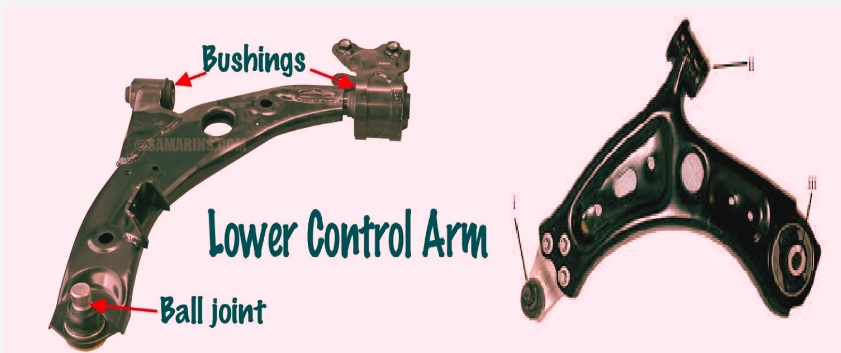
The lower control arm is an important component of the vehicle suspension system. It makes a connection between the chassis and the wheel hub, which provides smooth wheel movement. It basically absorbs braking, acceleration, and cornering forces to make a stable vehicle. If lower control arms are not working well, it affects driving since it causes high wear on tires and also affects the steering’s performance. In this post we will cover detailed features of the lower control arm and related factors. So let’s get started.
What is the Lower Control Arm?
- The lower control arm is a metallic structure that firmly holds the wheels to the vehicle chassis. It is like a bar that moves upward and downward according to the road and maintains wheel alignment according to other car parts.
- It is best for steering and suspension since it manages wheels at their position and helps to absorb road effects.
- The lower control arm now becomes an important part of advanced vehicles. That also connects the vehicle’s frame to the steering knuckle to help the wheels move.
- Two control arms exist in each vehicle, one on each side of the front suspension.
- Both operations with upper control arms for providing stability when turns occur, as well as braking and acceleration
Replacement factor for Lower Control Arm
Different signs that indicate replacement of the lower control arms. Some common signs are
Vibrations and Steering
- If there are vibrations that occur on the complete steering wheel, like during high-speed driving or when facing difficult steering, that means you have damaged lower control arms.
Tire Wear
- If the lower control arm is damaged, it affects wheel alignment and causes uneven tire wear. If there is one-sided wear on tires, it means it’s best to check the suspension system.
Knocking Sounds
- If there are knocking sounds occurring when driving on bumpy roads, that shows the lower control arm is damaged.
damaged bushings
- control arms based on rubber bushings for absorbing shocks and controlling vibrations. If bushings are damaged, it causes suspension instability and also makes steering movements difficult.
- If you find any signs, check those lower control arms. Since driving with a faulty control arm causes more damage to the vehicle’s suspension system,
Differences Between Upper and Lower Control Arms
Upper Control Arms
- Heavy-duty vehicles such as SUVs and trucks get features from upper control arms. But manufacturers use low-cost sheet metal for bulk manufacturing.
- Upper control arms are the best solution for suspension lifting. Basic lifting features to make wheel traveling the best. A different suspension system for off-road vehicles uses a control arm that makes the component durable, with a larger part of the ball joint replacement.
- There can be good wheel alignment for other vehicles where spacers are used.
Lower Control Arms
- The lower control arm is the main component of the vehicle suspension system since it makes a connection between the wheel and the suspension system.
- Wheel alignment and suspension systems do not work well without the lower control arm.
- • The lower control arm helps vehicles absorb shock during movement on bumpy roads, such as potholes. If the pothole is of enough size
Some more differences are as
Location:
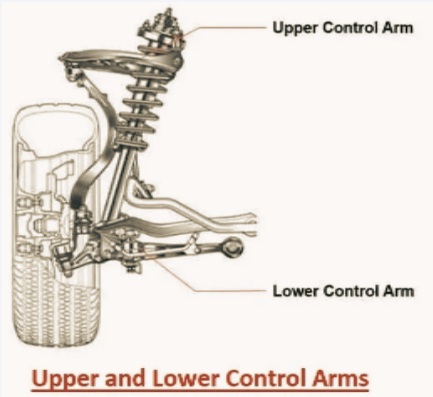
- • The upper control arm exists over the steering knuckle or wheel hub, and the lower control arm exists on the downside.
existence:
- The lower control arm is the main component for front suspension, such as the common MacPherson strut. Upper control arms are based on complicated designs such as double wishbone or multi-link suspensions.
Load Bearing
- In different double wishbone designs, the lower control arm is a larger size and a robust design. since it’s highly compatible with the weight of the vehicle and faces high forces when braking and acceleration occur. Spring-seated over lower control arms. The upper control arm is used for controlling the upper part of the knuckle and provides wheel alignment and stability.
Size
- Reflection of load-bearing roles: lower control arms are beefier. Real shapes can be different for each, according to the design of the vehicles.
Alignment
- Both make accurate vehicle alignment since the double wishbone system, set on the upper control arm, provides the main features for setting camber and also caster angles.
Replacement process of the Lower Control Arm
There are steps involved in replacing the lower control arm.
Vehicle lifting
- With the help of a jack lift, get the vehicle off the ground and check that it gets strong support from jack stands. That helps to access suspension parts.
Wheel disconnection
- When the vehicle lift disconnects the wheel for easy access to suspension components
Control arm disconnection
- There is a need to disconnect the bolt that makes a connection with the lower control arm to the chassis and steering knuckle. That needed force since a bolt may be seized.
Connect the new control arm.
- When the old control arm is disconnected, connect the new one there. Tighten bolts. Check that the alignment is proper before tightening all components.
Test Drive
- When control arms are replaced, strongly secure the wheel, lower the vehicle, and check that lug nuts are accurately tightened. Perform a test drive to check that smooth handling exists and ensure there are not vibrations.
How To Prevent Premature Lower Control Arm Failure
There are some tips for preventing lower control arm
Maintenance:
- Proper maintenance of the vehicle suspension system: inspect with a professional to find damage on the lower control arm bushing, ball joints, and other components.
Accurate tire inflation:
- Keep tires inflated to minimize pressure over the lower control arm bushing and also other parts.
Avoid rough terrain.
- It can occur that moving on uneven terrain on speed bumps, applies more pressure on lower control arm bushings and other parts
Proper alignment:
- Check that vehicle alignment is regular and adjust if any improvement is needed. If alignment is not correct, it causes tire wear and applies extra pressure to the lower control arm components.
Prevent overloading:
- Overloading of the vehicle, since extra pressure is applied to the lower control arm
Prevent sudden stops
- does not cause sudden stops since applying high pressure to the lower control arms
Location of Control Arms
- Control arms are important, but their location must be known. Their place is important since it helps to connect with other suspension components.
- Control arms exist in the vehicle suspension system and connect the chassis or frame with the wheel assembly. It exists on both sides in different independent rear suspension layouts.
- Control arms are not visible at the side of the car; they exist beneath the important structure of the suspension.
- For the front suspension, there is one lower control arm on a single side. Like MacPherson struts, which employ a single lower control arm, double wishbones have upper and lower control arms on both sides.
- Front arms are important for steering input since they absorb road shocks.
- For rear suspension, the design can be different. Vehicles having a solid rear axle use different locating arms than conventional control arms for easy movement.
- Different vehicles come with IRS suspension for accurate quality and handling features, and IRS systems use upper and lower control arms or series connections that work alike.
- With that, each side for managing wheel alignment.
Control arm importance
- There are two types operated in combination. In a suspension system, upper and lower control arms are important for safe operation. If any failure occurs, it affects handling and stability. Both work as an integrated system
- If a vehicle is designed with upper and lower control arms, both are important. Their design is such that it offers accurate control for the movement of the wheel. If the upper control arm does not work, it will be damaged like the lower control arm.
- If the car comes with lower control arms, then a single lower arm is important. For a double wishbone setup, the lower arm faces static weight, and the forces directly affected help to make structural safety important.
- The upper arm is important for accurate camber angle maintenance control, the upper pivot point of the wheel, and managing abrupt movement.
- In case of upper control arm failure, wheel control also affects face alignment error and is a safety hazard.
is it possible to Drive With A Broken Control Arm?
- It is an important safety question: do not drive when you have a broken control arm. A broken control arm shows a suspension connection failed, causing wheel control losses and making the vehicle unsafe.
- Either the upper or lower damaged control arm affects the vehicle suspension system. Control arms make connections in the assembly car frames. If it damaged the connection, it was affected. It causes damage to wheel control.
- • The wheel can move outwards or inwards; damage to the vehicle causes steering difficulties and movement.
People also ask
What happens when the lower control arm goes bad?
- A failing control arm causes the car to be unstable during the steering process. The vehicle moves to one side during wheel turning. This error causes a bent control arm that does not hold the wheel assembly in an accurate configuration. It also occurs when a bushing is damaged.
Is there another name for a lower control arm?
- Upper and lower control arms are designed like wishbones. They are also called A-frames.
Can I replace a control arm myself?
- Yes, with the use of an accurate tool and proper knowledge, car users can replace lower control arms. Replacement of the lower control arm normally occurs in 2 to 4 hours, according to vehicle design and experience.