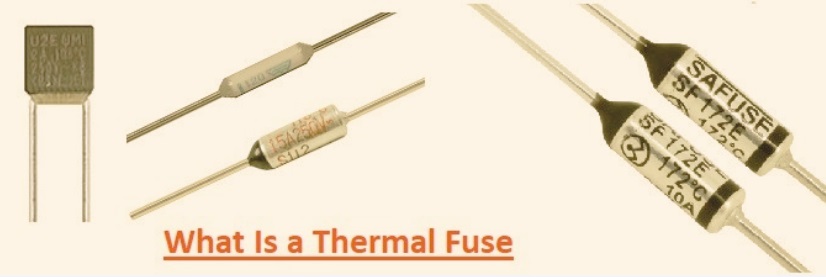
A thermal fuse is a one-time, non-resettable component that offers overheating temperature protection in small devices and electric heaters. Thermal fuses operate when other safety factors do not operate well. It controls temperature increases to a high level and prevents devices from being damaged.
It also provides one-time-use protection that is not repairable. It needed to be replaced when a fault occurs that thataffect prodcut damage identification. In this post, we will cover details for the thermal fuse and related factors. So let’s get started.
What is a Thermal Fuse?
- The thermal fuse is a device that offers protection from overheating. This device is connected to heating-based electrical devices.
- When a device failure occurs, it causes heat production. If the temperature is higher than the normal temperature conditions, the thermal fuse operates to disconnect power to save devices from damage.
- Thermal use is like a fuse, normally operating. It provides a high-power path for the circuit. If it does not cross the rating value when operated, it does not perform the fuse operation and does not come with an effect on the circuit. If performing fuse operations, disconnect power in the circuit when the devices do not generate different temperatures.
- It is different from a fused fuse that blows through heat produced if the current crosses rating current.
Thermal Fuses Working
Temperature-sensitive cut-off operation
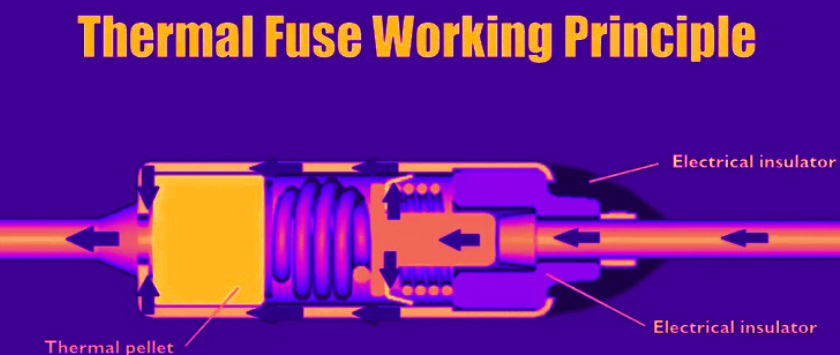
- thermal fuses made with certain temperature-sensitive materials that operate in extreme heating conditions. This process occurs through a fusible alloy or spring-loaded contact connecting at a position with heat-sensitive material.
- When the temperature reaches a certain limit, the fusible alloy melts, resulting in the operation of the fuse for circuit opening.
One-time use features
- Thermal fuses are single-use devices. When operating it breaks the circuit, and it is not reused. These one-time-use features help the devices operate in safe conditions till they get working replacements, solving the main cause of overheating.
Protection from overheating
- The main function of a thermal fuse is to save devices from the electrical system, causing overheating. Thermal fuses operate in cutoff conditions, cutting off the power supply from damaging components, fire effects, and any injury for users who operate in safe working conditions.
- It operated in protection devices, like simple machines to industrial machines.
Electrical fire prevention
- Thermal fuses protect from electrical fire. like auxiliary safety system fuses in a thermal engine for operating the safety system when the device fails if the device misfires.
- After installing, these fuses remove power according to temperature so it does not face unsafe values, causing combustible fire over certain devices.
- temperature safety devices used for devices for heat production or high power cost value
Features of Thermal Fuse
A thermal fuse comes with features for melting temperature, high voltage handling, small size, and lower cost. The thermal fuse is mentioned with the rated temperature value and rated current features.
Some main features are
Rated temperature
- It is the fuse temperature or operating temperature that is defined by the temperature where the temperature increases with the fusing temperature of one degree centigrade per minute in no-load conditions.
Fusing accuracy
- It is defined as the difference between the actual fusing temperature of the thermal fuse and the rated temperature.
Rated current and rated voltage
- Nominal current is 5 amperes, and the voltage for the thermal fuse is 250 volts.
Types of Thermal Fuse
There are 3 main types of thermal fuses. Each has its own features.
Organic Thermal Fuse
- It comes with a moving contact, spring, and fusible design. Before operating the thermal fuse, current flows from left to the sliding connection and flows in the metallic shell at the right side.
- If the external temperature follows a certain temperature, the organic melt faces melting and compression spring and is converted to a loose.
- So spring gets expanded, and the sliding contact is distinct from the left lead. As a result, the circuit opens, and the current flow between the sliding connection and the left lead is disconnected.
Porcelain Tube
- It comes with an axisymmetric lead fusible alloy that faces melting with a certain temperature that is a special compound for avoiding melting and also the oxidation process and a ceramic insulator.
- If ambient temperature increases, certain resin mixtures are converted to a liquid state.
- When it gets to the melting point, through using a resin mixture, the molten alloy shrinks in a design centered on the leads with both ends in surface tension. ball-shaped cut-off circuit permanently
Square Shell-type Thermal Fuse
- A component of fusible alloy wire configured between two thermal fuse pins. Fusible alloy wire comes with a special resin cover. current move from one pin towards the other.
- If the temperature over the thermal fuse is high at operating temperature, the fusible alloy melts and forms a spherical design and is connected with the ends of two pins through surface tension and special resin. So the circuit is disconnected
Thermal Fuse Working
- If there is current flowing in the conductor, the conductor produces heat due to the conductor’s resistor. Caloric value according to this formula is Q=0.24I²RT;
- In this equation, Q is the caloric value, which is the 0.24 constant; I is the current flow in the conductor; R is the conductor resistance; and T is time, which shows the current flow in the conductor.
- Based on the equation, it is not difficult to check the fuse’s working operation. If the material and shape of the fuse are known, resistance is measured as R. if current flow in it causes heat production and the calorific value increases over time.
- Current and resistance define heat generation speed. The structure of the fuse and connections defines the heat dissipation speed.
- If heat generation is less compared to the rate of dissipation, the fuse does not get blown.
- If the heat generation rate is equal to the heat dissipation rate, do not perform the fuse operation longer.
- If the rate of heat generation is larger than the rate of heat dissipation, more heat is produced.
- It comes with certain specific heat increases in heat affected through temperature increases.
- In case the temperature is higher than the melting point of the fuse, the fuse blows. It shows how fuses operate.
- So we must get thisfeatures that check the features of materials selected for manufacturing fuses and check that they offer constant dimensions.
- since it is important for wokring of the fuse.
Selecting the right Thermal Fuse
Temperature ratings
- For the selection of an accurate thermal fuse, temperature rating is the main factor. The fuse operates by getting hot to the temperature value and disconnecting the circuit.
- Use a thermal fuse whose temperature rating is more than the normal operating temperature of devices, since lower temperatures result in damage.
Current and voltage value
- It is important for the current and voltage rating of the thermal fuse to affect circuit requirements or crossing demand of projects. Low current or current value affects early faults as well as protection from failure. That feature should come with the highest current and andvoltage level according to operating conditions and high surge conditions.
Size and form factor
- Physical dimension is important for using a thermal fuse in accurate mounting and supported to devices. For fuse selection, it is best to check the space existing and configured on the devices. Miniature fuses are connected for some projects and others in larger projects.
- Check that the fuse is easily connected and not affecting the operations of other components.
Response time
- Response time will show how quickly the thermal fuse affects fault occurrence in overheating. So fast response time and protection are preferred; some cause tripping. Following the selection of a fuse through accurate response time features of use and effects of overheating
What to do if the thermal fuse keeps blowing?
- If there is a need for regular replacement of thermal fuses, it is important to check the main causes for faults. Since replacement of a blown thermal fuse is a basic solution, basic damages are an indication of any serious faultswith devies.that result in overheating or some other electrical faults.
- Some common causes for solving faults of thermal fuses are for different devices.
Dryers
- cleaning ducts and the blower wheel for accurate airflow and avoiding overheating. A clogged vent causes overheating of the dryer, which results in a blown thermal fuse.
Ovens
- It causes cooling fans and vents to be unobstructed for certain heat dissipation. blocked vents result high heat generation and the resulting thermal fuse blown
HVAC Systems:
- Replacement of the dusty filter and checking fan motor for accurate functions. A dirty filter or faulty fan motor prevents airflow and resulting oveheating, causing thermal fuse damage.
Electrical Appliances
- Check loose wiring that result electrical damage with overheating. It is not ensured for checking the thermal fuse best is to get technician services
Thermal Fuses applications
Different applications for thermal fuses are
Home devices
- Thermal fuses connected with different devices like coffee makers, electric kettles, and microwave ovens for avoiding overheating also minimize chances of fire.
HVAC Systems
- The HVAC system uses thermal fuses for protection from high temperatures, such as motors, and the control circuits offer safe and effective operations.
vehicles
- Thermal fuses are employed for different vehicle parts such as seat heaters, cooling fans, and ignition systems for avoiding any faults and also minimizing chances for fire.
Power devices
- Different power devices like drills, saws, and grinders use thermal fuses for protection from motor overheating and enhance the working life of devices.
Industrial Machines
- Thermal fuses important part of industrial machines like compressors, pumps, and also manufacturing devices, where overheating results in device downtime, increases manufacturing delays, and safety hazard
How to connect the Thermal Fuse?
Replacing a blown fuse requires proper safety precautions. Follow these points for installations.
- First, arrange tools according to the locations of use; first, get pliers, a screwdriver, and a handbook.
- Before applying the devices, ensure they are not connected to a power supply.
- To find the accurate connection point of the device, get details from the manual.
How to replace a fuse
- Based on the guidelines of the manual, disconnect panels or different components that affect access to the fuse.
- Now disconnect the damaged fuse, find the wire connected with the fuse, and remove them with pliers according to the connection.
- Check the new fuse according to the type of device. Make a connection of the wire with the new fuse.
- Again, install panels disconnected properly for a strong connection.
Testing check
- Make connections of all components, again connect all devices, and test them. If operable, use it.
- When performing start-up testing, check for any noise generated by devices that may cause or produce high heat.
- If you find any fault get repairing from expert
FAQs
What is the use of a thermal fuse?
- A thermal fuse is used if overheating occurs during the repair or replacement of the working life. One process is the ismeltable pellet holding spring.
What is the function and working of a fuse?
- A fuse is a safety device that functions for protection from overcurrent of a circuit. Its metallic component is a metallic wire that melts if there is high current flow that stops current flow.
What is another name for a thermal fuse?
- thermal fuses, also called thermal cutoffs, which are small heat-sensitive devices configured with circuits.
What are three types of fuses?
- AC Fuses.
- DC Fuses.
- Cylindrical Fuse Types.
- HRC Fuse Types.