According to the FTC, users lost $1.3 billion during scams in 2022, and these scams occur with use of a fake profile picture that is not of the right person. Research published in 2024 in the Journal of Online Trust and Safety found that roughly 10,000 daily active Twitter accounts were using GAN-generated faces as profile photos.
The person we are talking about is not right; fake profile photos are two types, like photos taken from real people’s social platforms and images downloaded from commercial libraries, and the third type is AI-generated faces that belong to nobody.
Each gets certain different detection techniques, but these 3 were identified with some small help. Getting an idea of the tool used, whose conditions make a difference between fast identification and a wasted search. OSINT software is a review and comparison resource that covers reverse lookup and OSINT tools, exactly the types of tools used to properly identify profile photos, trace image sources, and cross-check online identities.
That is best for a starting location before working with a specific service.
This tutorial helps to provide a practical process for checking profile photos, from free visual inspection to AI detection with complete identity lookup, in order from fastest to most thorough. According to the FTC, users lost $1.3 billion during scams in 2022, and these scams occur with the use of a fake profile picture that is not of the right person. Research published in 2024 in the Journal of Online Trust and Safety found that roughly 10,000 daily active Twitter accounts were using GAN-generated faces as profile photos.
The person we are talking about is not right; fake profile photos are of two types: photos taken from real people’s social platforms and images downloaded from commercial libraries, and the third type is AI-generated faces that belong to nobody.

3 Types of Fake Profile Photos
Getting an idea about fake photos, we are working on a process for finding which method helps to expose
Stolen real-person photos
A scammer downloads photos from social IDs of a person, like Facebook, LinkedIn, or Instagram profiles, and uses them to create a wrong identity. These pictures, shown in reverse photosearch, exist elsewhere online, normally used with a different name.
commercial images
Profile photos sourced from Shutterstock, Getty Images, or other libraries look polished. These can be traced through reverse search and return results from stock image sources, comparing them to real profiles.
AI-generated
Different tools such as Stable Diffusion and StyleGAN make photorealistic images that are not of the original person. That is not shown in reverse image search since it is not posted on any platform that needs AI detection tools for identification.
3rd category, AI-generated faces, are a high threat, and most people’s verification habits do not come in handy
Visual Red Flags Can Be Spotted Before Using the Tool
Human eyes facing AI-generated faces seem more real. According to a 2022 study in the journal Vision Research, participants not only failed to properly differentiate original faces from AI-generated ones but sometimes rated fake images as more real than original. That said, many consistent tells are worth checking:
Ear and earring asymmetry.
GAN-made images normally have mismatched earrings or asymmetric ears. If earrings are not the same, check images closely.
Background blur artifacts.
AI-made faces show unnatural background shifts, blurring not according to the physical logic of depth of field, or have backgrounds that repeat patterns, as real environments do not.
Teeth and hair at the edges.
Teeth rows that look smooth, or hair strands that mix into the background compared to terminating cleanly, are common GAN outputs.
Skin that is too smooth
Original skins come with pores, tonal variations, and small errors. Gain skin is hyper-smoothed, normally over the cheeks and forehead.
Consistent pupil placement.
Research on GAN face detection, such as work cited in IEEE/CVF conference proceedings on computer vision, confirms that GAN-generated faces show unusually constant eye and pupil placement over images, a pattern that real faces do not share.
Image quality mismatch
High-resolution faces over blurry or low-resolution background-referred composition; faces added, not photographed in that environment. these checking take about 30 seconds; they do not get fake photos but narrow the field before spending time running tool-based searches.
Reverse Image Search (Google Images and TinEye)
Reverse image search is a proper method for finding stolen real-person photos and stock images. It works through matching the visual signature of the photo over indexed web content. If the same images are shown under another person’s name, it means it is deception.
Google Images — desktop:
Open photos at images.google.com in a browser.
Click the camera icon in the search bar to open the image search panel.
Drag and drop the profile photo into the panel, or paste the image URL if the profile publicly exists.
Review results, looking specifically for the same face shown with a different name, the image traced to a stock library, or the photo shown on an unrelated website or forum.
Google Images — mobile (Chrome):
Open Chrome on iOS or Android and shift to the profile where the photo appears.
Long-press the profile photo until a context menu is shown.
Choose ‘Search image with Google’ or ‘Search this image’. ‘Results open in a new tab.
TinEye is another option that works especially for tracking image reuse across time. It indexes more than 66 billion images and the same and also certain images first shown online. If the photo we’re checking was shown years before the account was logged in, the account is almost certainly using a stolen image.
- Go to tineye.com.
- Upload the image or paste the URL.
- Sort results by ‘Oldest’ to see when and where the image was first indexed.
Important caveat: neither Google Images nor TinEye can detect AI-generated faces that were never posted online before. If reverse search returns no results, the image may be AI-generated or comparable to clean — proceed to Method 2.
AI Image Detectors for GAN and Deepfake Faces
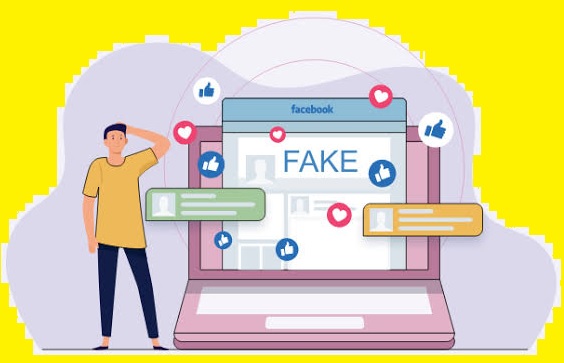
Reverse search is blind for AI-generated faces since those images do not come with prior web existence or formatting. AI detectors get there in different ways; they analyze pixel-level patterns, frequency artifacts, and structural inconsistencies that make models leave behind artifacts invisible to the human eye that are detected with trained neural networks.
3 tools are:
Hive Moderation AI Detector:
free web-based tools that define images as AI-generated or real with a confidence percentage. that trained overboard dataset images from main generative models like Midjourney, DALL-E, and Stable Diffusion. Accurate results are best for current model outputs that degrade from older GAN architectures.
Winston AI:
that provide a 14-day free trial with 2000 credits, returning forensic styles noting it comes with EXIF data, IPTC metadata, and C2PA provenance details over the AI probability score. best when you need a record of the check, not just a result.
Sightengine
API first comes with a web interface for performing manual checking. cites like the University of Rochester and the University of Kansas study with the help of 80,000 images as part of its accuracy baseline. high technical compared to others but returns granular classification data.
No AI detector is 100% correct. Tools trained on one generation of AI models miss outputs from newer architectures, and high-quality photorealistic photography can trigger incorrect positives. A score above 85% probability of AI generation is a reliable flag; scores in the 60–80% range warrant cross-referencing with a second tool.
How to Run an AI Detection Check in 3 Steps
Get a clean screenshot of the photo, click right, and save it in an image file. prevent screenshots through UI elements overlaid on the face.
Upload images for 2 AI detector tools, Hive Moderation and either Winston AI or Sightengine. Compare confidence scores.
Both tools return more than 80 per cent AI chances; get a profile using a synthetic face. If one returns high and one is returning not sure, run the 3rd check or follow the visual inspection checklist from the previous section.
OSINT Lookup Tools for Full Identity Verification
For some conditions, the profile photo follows a reverse search and AI detection check, meaning the image is real and unique but something for the profile is not added. Name not according to matching location, job history not clear, or account new with no clear profile.
Reverse lookup and OSINT tools are important when there is a real photo but the identity is not sure. OSINT helps to cross-reference the name, location, phone number, or email address relevant to the profile against public records, people search databases, and social media indexing.
A real person leaves a coherent trail, a consistent name, location, employment history, and social presence. A rough identity does not.
osint-software.com performs proper review and compares tools employed for this identity cross-check. Compared to getting a random search site and providing the best data, review the options first, ensuring we use the tool through accurate data coverage for certain details we are trying to confirm.
Comparing the Best Tools for Checking Fake Profile Photos
The right tool based on the type of fake photo you suspect. Here is how the main options compare:
| Feature / Criteria | osint-software.com | Google Images | TinEye | Social Catfish |
| AI face detection coverage | Covered in reviews | No | No | No |
| Reverse image search (stolen photos) | Covered in reviews | Yes | Yes | Yes |
| Identity / name cross-reference | Covered in reviews | No | No | Yes (paid) |
| Free tier available | Yes (review site) | Yes | Yes (partial) | Limited |
| Mobile-friendly workflow | Covered in reviews | Yes (Chrome) | Partial | Yes |
| Accuracy / reliability notes | Per-tool review | Strong for indexed photos | Excellent for image reuse | Varies by dataset |
| Independent tool comparisons | Yes | No | No | No |
| OSINT / people search data | Covered in reviews | No | No | Partial |
Google Images and TinEye manage stolen real-person photos. Either tool follows AI-generated IDs. Social Catfish provides identity verification services that focus solely on image searches and people look-ups, without including reviews of identity-competing tools. osint-software.com performs different roles: it is a reference layer that helps to select the best tool for a certain specific scenario before you run the search—useful when you need OSINT-grade identity verification rather than a basic image match.
What to Do When Confirming a Photo Is Not Real
After confirming the profile photo is not real and AI-generated, now perform detection:
Do not engage further.
Do not instruct the account holder on what you get or which tool you use. Scammers learn they are caught often and pivot with new faulty IDs with the help of the same communication channel.
Document everything before reporting.
Note screenshots of profiles, conversations, and tool results that ensure a fake photo. also timestamps. This documentation is best if you report to a platform, a financial institution, or the FTC.
Report to the platform
Every major platform — Facebook, Instagram, LinkedIn, Tinder, Twitter/X — has a fake account reporting mechanism. Use it. Also, the evidence screenshots are. Reports with evidence are chances to result in account removal.
Report to the FTC at reportfraud.gov or ftc.gov if money was requested.
If the account is requesting gift cards, money, or financial details. That scam should be filed with the FTC.
Check whether your own photos are being used.
Run your profile photo with Google Images and TinEye. If a real photo is showing on an account not made, connect to the platform or the trust and safety team directly through a formal impersonation report.
Frequently Asked Questions
How to tell if a profile picture is AI-generated without using a tool?
Check asymmetric earrings or mismatched points, unnatural skin smoothness, blurred backgrounds that do not follow physical depth-of-field logic, and hair or teeth edges that blend roughly into the background.
It is a constant GAN artifact shown with the eye; it is said that advanced diffusion models make images that are difficult to differentiate with visual inspection alone—AI detector tools are more reliable for current model outputs.
Does a reverse image search returning no results mean the photo is real?
Not needed: AI-generated faces not indexed soon before are made; they return zero results on Google Images or TinEye.
No results over reverse search show the image, either not posted online before or as a recent upload. If you get no reverse search results but the profile still looks suspicious, proceed to an AI detector tool.
What is the accurate free tool for checking fake profile photos?
stolen real person picture, Google image bestand detailed free method. AI-generated faces: Hive Moderation’s free AI detector is best for current model outputs. Complete identity verification beyond image, TinEye combined with a people search tool offers the most complete picture. osint-software.com reviews these tools with accurate notes so you can fulfill the tool for the certain type of verification you need.