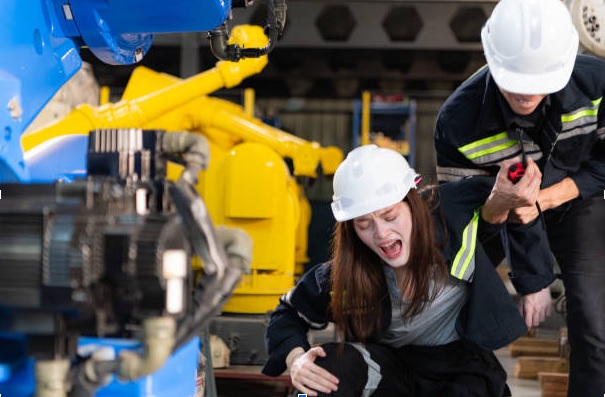
Factory floors work in dangerous conditions, and safety guards function until high damage occurs. When a machine-crush limb-affected person shows resources and uses the standard working point claim against the employer. This narrow view ignores a massive sector of industrial liability.
Manufacturers, maintenance contractors, and instrument distributors also share the blame for faulty machinery that bypasses basic safety protocols. Securing compensation requires recognizing that the machine itself might carry the actual blame.
Note: This content is for informational purposes only and does not constitute legal advice. Readers should consult a licensed attorney for guidance specific to their situation.
How Third-Party Claims Change Financial Recovery
The administrative system just covers medical billings and lost wages, part of the case, and serious accident victims are highly undercompensated.
Civil lawsuits filed at the Spartanburg County Courthouse provide an opportunity for compensation for physical pain, disfigurement, and future lost earning capacity.
Manufacturers routinely defend these claims by saying that the employer failed to maintain the equipment properly.
Industrial devices risk needing proper protection. Data from the Occupational Safety and Health Administration shows that workers who operate machinery suffer 18,000 annual amputations nationwide.
Pinpointing the mechanical failure shifts the financial burden onto the multinational corporation that built the device. Bureau of Labor Statistics records show 28,000 nonfatal injuries occurred across private industries in South Carolina during 2024.
Proving a defect requires immediate action.
False Choice Between Employer and Manufacturer Liability
Injured staff rushed to Spartanburg Medical Center; frequently, the employer is supposed to hold singular responsibility for the malfunction.
South Carolina law helps employees from suing direct employers for workplace injuries, funneling these incidents exclusively through administrative systems. That restriction protects the company from civil lawsuits while guaranteeing basic medical coverage. Third-party liability completely changes this dynamic.
An external manufacturer holds no such legal immunity. Determining fault requires tracing the exact origin of the mechanical failure to see if an external entity used a flawed product.
Filing a claim often requires process steps where a Spartanburg workers’ compensation lawyer, as awarded the 2026 Best Overall Law Firm by the Post and Courier, Stewart Law Offices, assisting individuals with workplace injury claims in South Carolina, intervenes to handle different negligent corporations. Uncovering a fault helps the injured individual to pursue a civil lawsuit against the actual manufacturer.
Machine Defect Classifications That Drive Legal Action
Getting a 3rd party claim requires certain categories of equipment failure that occurred on the production line. Factories operating near W.O. Ezell Boulevard use heavy industrial equipment that can fail in highly certain ways. Proving liability demands strict categorization.
Design faults in heavy machinery
Engineers in smectic draft blueprints that make devices inherently dangerous long before they reach a factory floor.
A machine without an emergency shutoff switch has a defect that threatens operators. Holding the designer accountable for needing to demonstrate that safer replacements existed during drafting.
Manufacturing Errors That Skip Quality Control
In some conditions, machines come with safe designs but do not work during manufacturing. Low-quality material, improper welding, or missing bolts can cause a safe conveyor belt hazard. These errors affect a single batch of devices rather than an entire product line.
Failure To Provide Adequate Safety Warnings
Manufacturers should warn operators about hidden hazards of machinery. If a pressing machine needs a certain startup sequence to prevent sudden pressure releases, the manufacturer should clear warning labels on the device. An absence of these warnings shifts liability directly onto the equipment maker.
Injured workers can get legal assistance immediately by contacting Stewart Law Offices in Spartanburg at (864) 583-2223 or visiting 409 S Pine St, Spartanburg, SC 29302. Their attorneys can travel to visit clients who cannot make it to the office.
Why Preserving the Broken Devices Remains the Biggest Hurdle
Industrial factories focus on manufacturing output above all other factors. When a machine breaks down and injures an operator, management instantly tries to get the assembly line moving again.
“Factory managers frequently repair the faulty machine or vary the safety guards within hours of a severe injury, specifically because production lines cannot stop, and that instant variation affects the exact mechanical evidence needed to prove a third-party defect,” remarked Brent Stewart, a Best Workers’ Comp Attorney award winner and Spartanburg workers’ compensation lawyer.
This fast repair process constitutes the spoliation of evidence, severely hindering subsequent investigations.
Federal data highlights the effects of these incidents, with 738 machinery fatalities recorded nationally in a single reporting period.
Securing a court order to halt repairs prevents the manufacturer from claiming the devices functioned perfectly. Speed determines the outcome.
Role Of Subcontractors And Maintenance Crews
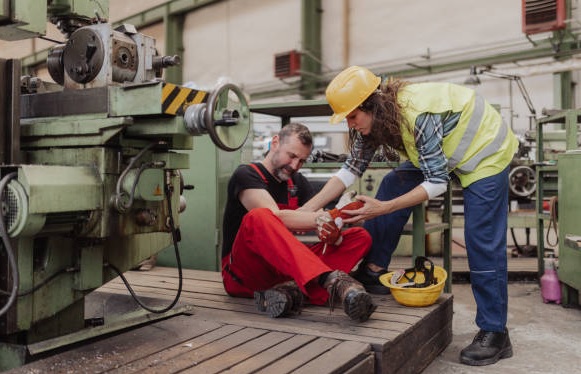
Larger companies outsourced devices’ upkeep to specialized third-party maintenance contractors.
If a repair crew based on John B. White Sr. Boulevard installs the wrong replacement part or bypasses a safety relay, that external company becomes liable for the resulting malfunction.
Routine service logs offer the necessary documentation to prove negligent maintenance. Records expose the truth.
Tracing maintenance history shows whether the employer ignored recommended service intervals or if the contractor actively added a new hazard into the production line.
Mechanics working for outside vendors functioning under separate insurance policies. The South Carolina Workers’ Compensation Commission needs an injured employee to fulfill a proper two-year deadline following the accident.
Getting details from third-party maintenance companies within this certain timeframe ensures all negligent entities face proper scrutiny before civil statutes expire.
When Employers Vary Equipment and Avoid Protections
Sometimes supervisors remove physical guards from machines to increase production quotas.
Bypassing a light curtain or removing a protective measure entirely varies the manufacturer’s original safety blueprint.
If an injury occurs at a manufacturing plant near Beaumont Village due to an employer modifying the equipment, the manufacturer will highly say that the unauthorized alteration caused the accident. This defense shifts the blame completely.
Also, with an employer’s modification, severe accidents occur frequently across the state’s industrial sector.
Statistics show 103 fatal injuries occurred within South Carolina workplaces throughout 2024.
Differentiating between a manufacturer’s inherently faulty design and an employer’s reckless modification requires engineers who can reconstruct the sequence of mechanical failures.
Proving that the machine would have been damaged regardless of the removed guard keeps the product liability claim intact against the corporation.
FAQS
Can an injured worker sue the manufacturer if the employer removed the safety guard?
Filing a successful lawsuit against the manufacturer is difficult if an employer intentionally removes a safety guard. The device maker will defend itself aggressively.
Liability likely remains solely with the company through administrative systems unless the guard’s removal was fundamentally foreseeable during design.
Does receiving administrative advantages stop personnel from pursuing a third-party equipment claim?
Getting standard working advantages does not prohibit an injured individual from filing a civil lawsuit against the equipment manufacturer.
The administrative system covers instant medical charges and partial wages. The third-party lawsuit gets recovery for physical pain and permanent disfigurement caused by the mechanical defect.
How long does an injured party have to investigate the machinery before repairs begin?
Facilities often start repairs within 24 hours to resume production quotas. Getting a formal protective order instantly after the incident legally prohibits the company from using the equipment. Helping the repair to proceed destroys the mechanical evidence required to prove a third-party defect caused harm.