Engineering projects often begin with something that is difficult to describe clearly: an idea. It may be a rough concept for a machine part, a product enclosure, a workshop tool, an industrial component or a new way of arranging existing parts. At this stage, engineers may have notes, sketches or conversations, but the final design is still far away.
An AI Image Generator can be useful during this early stage, with Higgsfield helping engineers visualise concepts and compare possible design directions. Rather than moving straight into detailed drawings, engineers can create rough visual references from written descriptions and use them to assess different approaches.
This does not mean generated images can replace CAD drawings, calculations or engineering analysis. They cannot confirm dimensions, material strength, tolerances or safety. Their value is much simpler: they can help people see a possibility before spending significant time developing it.
For engineering students, designers, fabricators and technical teams, this can make early discussions more concrete and help identify which ideas deserve further development.
Why Early Visualisation Matters in Engineering
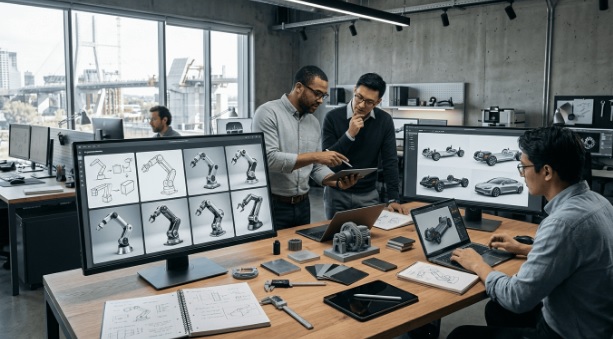
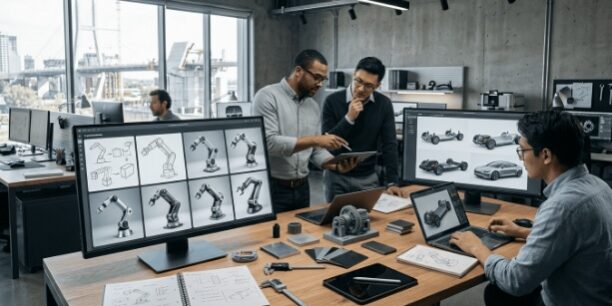
A design can sound straightforward when explained in words but become much harder to understand once different people interpret those words differently. An engineer may have one arrangement in mind, while a customer, technician or manufacturing colleague imagines something else.
An AI Image Generator can provide a common visual reference for that conversation. The image does not need to be technically perfect to be useful. It can simply show the approximate form, arrangement, environment or appearance being discussed.
Consider a team developing a compact equipment enclosure. One person may imagine a rectangular housing with front mounted controls, while another may picture a curved enclosure with controls positioned on the side. A quick visual exploration can make those differences obvious.
This is particularly useful when several concepts need to be compared. Rather than spending hours developing every option in detail, the team can first decide which general direction appears most practical.
The same idea applies to product development. An early concept may involve the shape of a handheld instrument, the arrangement of a control panel or the appearance of an industrial device. A visual reference can make discussions more focused before detailed engineering begins.
The important point is that visualisation comes before validation. The image helps communicate an idea, but engineering work determines whether the idea can actually be built.
Turning Written Descriptions Into Design Concepts
One of the simplest uses of an AI Image Generator is converting a written description into an approximate design concept.
An engineer might describe a small aluminium equipment enclosure with ventilation openings, mounting brackets, a removable front panel and space for electronic components. The generated result could provide a starting point for discussing the overall appearance and arrangement.
Different descriptions can then be tested. Perhaps the enclosure should be narrower. Maybe the controls should be moved to the front. Perhaps access panels should be positioned differently. These changes can be explored visually before the team begins a detailed model.
Higgsfield can be used as part of this early experimentation when a team wants to explore several visual directions. The useful part is not treating the result as a finished design, but using it to ask better questions about the concept.
For example, engineers can consider:
- Does the proposed form appear practical?
- Are important components easy to access?
- Could the arrangement create maintenance difficulties?
- Does the concept leave enough room for cables or connectors?
- Could the shape create manufacturing complications?
- Is the general layout suitable for the intended environment?
These questions still require engineering judgment. The generated picture simply gives people something concrete to discuss.
This approach can also help students. Someone learning mechanical design may find it easier to understand a concept after seeing several possible forms rather than reading only a written description.
Exploring Different Product and Component Ideas
Product development often involves several rounds of experimentation. A first idea may look promising, but another arrangement may eventually prove more suitable. An AI Image Generator can support this stage by helping create visual alternatives quickly.
For example, imagine a company considering a new handheld measuring device. The team might explore a traditional rectangular body, a curved design, a compact version for field use and another design with a larger display.
The purpose is not to select a final shape immediately. It is to compare broad directions.
A similar process can be used for mechanical components and industrial equipment. Engineers may want to explore the general appearance of brackets, housings, control cabinets, machine guards, workshop equipment or tool storage systems.
Higgsfield can provide another creative route for exploring these possibilities. Used carefully, it can help teams move through early concepts without confusing visual experimentation with technical development.
The advantage is speed. A detailed engineering model can take considerable time, particularly when dimensions, materials, fasteners and manufacturing methods have to be considered. Early visual concepts require much less commitment.
Once a promising direction has been identified, the normal engineering process can begin.
Supporting Mechanical Engineering Discussions
Mechanical engineering involves many situations where shape and arrangement matter.
An AI Image Generator may help when discussing the external appearance of a machine, the placement of access panels, the general form of a support structure or the arrangement of equipment within a workspace.
For example, a maintenance team could use a generated concept to discuss where service doors should be located on a machine enclosure. The image might reveal that a particular arrangement looks convenient from one angle but could make maintenance access difficult from another. This does not prove that the design is correct. It simply encourages the team to consider practical questions earlier.
Another possible application is product ergonomics. A concept image can help start a discussion about whether controls appear reachable, whether a handheld product looks comfortable to operate or whether an interface seems crowded.
These observations must later be checked using proper dimensions, prototypes and human factors methods. Still, an early visual reference can help identify questions that deserve attention.
The same principle can apply to manufacturing equipment. Before developing detailed assemblies, teams can explore how machines, storage areas, workstations and safety barriers might be arranged within a limited space.
Exploring Electronics and Equipment Enclosures
Electronics engineers can also benefit from early visual exploration. An AI Image Generator can help create concepts for equipment housings, control panels, instrument cases, PCB enclosures and other products where electronic components need to fit inside a physical structure.
Suppose an engineer is developing an enclosure for a small controller. The internal PCB dimensions, connectors, heat generation and mounting points will eventually determine the actual housing. But before those details are finalised, the team may want to explore different external designs.
A visual concept can show possibilities such as:
- Front mounted displays
- Side connectors
- Ventilation areas
- Mounting brackets
- Removable covers
- Indicator lights
- Cable entry points
These ideas can then be taken into CAD software for proper development.
Higgsfield may be useful when exploring different enclosure styles or presentation concepts, particularly when several visual directions need to be compared. However, it should not be treated as an engineering simulation.
An attractive enclosure image does not tell you whether heat will dissipate properly, whether the wall thickness is sufficient or whether the selected material can withstand the operating environment. Those questions belong to engineering analysis.
Helping With Manufacturing Concepts
Manufacturing is another area where visual communication can be helpful.
An AI Image Generator can help teams discuss the broad form of a product before deciding how it will be manufactured. A component that looks simple may become difficult to machine, mould, cast or fabricate once the actual production requirements are considered.
A concept image can encourage engineers to think about those issues earlier.
For instance, a team exploring a machined enclosure might compare a design with deep pockets against one with simpler external geometry. The visual comparison can lead to a discussion about machining access, tool movement, material removal and production cost.
The image itself does not perform that analysis. It simply creates a starting point for it.
The same applies to sheet metal products. A visual concept can help show where bends, panels, openings and mounting features might be positioned. Engineers can then determine whether those features can be produced using the available equipment and processes.
Higgsfield can be included during the concept stage when teams want to explore different appearances or arrangements before committing to detailed manufacturing drawings.
This separation between creative exploration and technical validation is essential.
Where AI Generated Engineering Images Have Limits
An AI Image Generator has an important limitation: it creates an image rather than an engineering specification.
A generated component may look realistic while containing impossible geometry. A bolt may appear correctly positioned but not actually connect two parts. A machine may show an attractive assembly without providing enough clearance for maintenance. Dimensions can also be misleading.
A picture cannot reliably tell you whether a shaft is 10 mm or 20 mm in diameter. It cannot establish whether a bracket can carry a particular load or whether a material can withstand repeated stress.
Engineers must therefore avoid using generated images as evidence that a design is technically sound.
The following still require proper engineering methods:
- Dimensioning
- Tolerance selection
- Material selection
- Load calculations
- Stress analysis
- Thermal analysis
- Electrical calculations
- Fluid calculations
- Safety assessment
- Manufacturing validation
- Prototype testing
This distinction is especially important when an image is shown to a customer or management team. Everyone should understand that the picture represents a concept unless it has been developed into an approved technical design.
Using AI Alongside CAD and Engineering Tools
The best way to use an AI Image Generator is alongside established engineering software and methods rather than instead of them.
A practical workflow might begin with a written problem statement. The team then creates several rough visual concepts and discusses their strengths and weaknesses.
The strongest concept can be developed into a CAD model. At this stage, accurate dimensions, materials, interfaces, tolerances and manufacturing requirements are introduced.
Engineering calculations and simulations can then be performed where required. A prototype may follow, allowing the design to be tested under realistic conditions.
Higgsfield can sit somewhere near the beginning of this process, where visual experimentation is most useful. It can help teams explore alternatives before they spend significant time developing each option in detail.
This can also make communication between departments easier. A designer, engineer and manufacturing specialist may interpret the same written description differently. A shared visual concept gives them something specific to discuss.
However, the technical drawing remains the document that communicates the actual engineered design.
Making the Process More Useful
An AI Image Generator becomes more useful when prompts are specific and the generated results are treated critically.
Instead of asking for a vague “modern machine,” an engineer can describe the intended application, approximate form, operating environment and important visible components.
For example, a prompt might specify an industrial control enclosure, wall mounted format, front access panel, cable entry points and a compact workshop environment. The result will still require interpretation, but it has a clearer purpose. It is also helpful to generate several alternatives rather than becoming attached to the first result.
Compare them and ask what each concept does well. One may have a better overall shape, another may provide more practical access and another may communicate the intended product more clearly.
The goal is not to find a perfect AI result. The goal is to use quick visual experiments to improve the thinking that happens before detailed engineering.
Higgsfield can support this exploratory stage, especially when teams want to compare different visual treatments. Higgsfield can also be considered when engineers or product teams need additional creative approaches for concept presentations.
Final Thoughts
An AI Image Generator can be a useful tool for engineers who need to explore ideas before moving into detailed design. It can turn written descriptions into visual references, support discussions between teams and make it easier to compare different product or equipment concepts.
Its usefulness is greatest during the early stages of a project. Once the concept becomes a real engineering proposal, the process must move toward accurate drawings, CAD models, calculations, simulations, prototypes and testing.
Higgsfield is one option for early visual experimentation, while Higgsfield can help teams explore different directions before selecting an approach for further development. Higgsfield AI creative suits may also provide additional ways to present early concepts, provided the resulting material is clearly identified as conceptual.
The most sensible approach is not to replace engineering methods with AI. It is to use AI where it adds value and keep established engineering practices where accuracy matters.
An AI Image Generator can help answer the early question, “What could this idea look like?” Engineering tools and professional judgment must answer the much more important question, “Will this design actually work?”