There are different batteries used in electronic projects, and each device comes with its own features and uses. Like AGM and lead-acid batteries, they are commonly used in that part of delivering power to vehicles and also storing renewable energy systems. Each comes with certain features and different applications. So let’s get started.
What is an AGM battery?
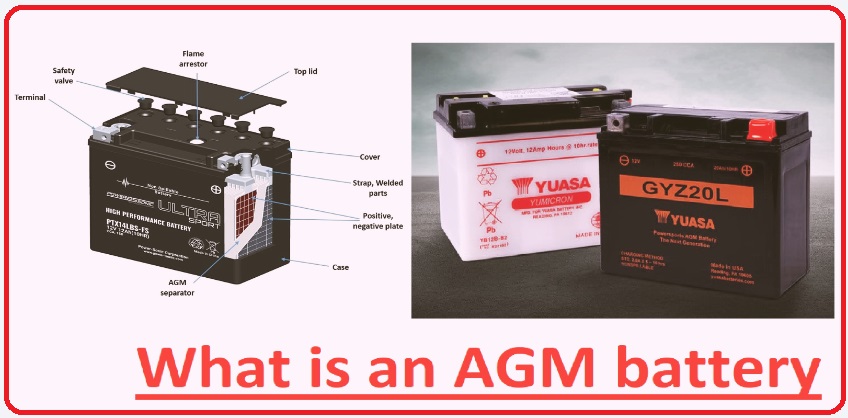
- AGM stands for absorbent glass mat, a new form of the conventional lead-acid battery with special features.
- AGM batteries do not use a liquid electrolyte solution but employ a fiberglass mat that features features to absorb electrolyte.
- An AGM battery comes with a fine glass mat that is configured between lead plates. That’s why an AGM battery is called an AGM valve-controlled accumulator.
- Glass mats are strongly packed between lead plates, that result in minimized vibrations. This battery safely operates better than conventional lead-acid batteries.
Features of AGM Batteries
Safety features
- Its immobilized electrolyte minimizes chances of leaking and spills, so these batteries operate more safely compared to other batteries. It performed well for confined spaces where any damage poses hazards.
GOOD Performance
- An AGM battery has high power at output and offers high energy compared to a conventional lead-acid battery. So it offers applications to operate well in high-performance vehicles and solar energy systems.
longer working life
- It faces less inner corrosion and degradation that affects working life, so it needs fewer replacements.
Durable design
- The electrolyte of the AGM battery has high resistance to vibrations and is best for heavy-duty projects
High-speed Charging:
- An AGM battery has high-speed charging compared to a lead-acid battery since it has good internal conduction features. so preferred for challenging projects
What are lead-acid batteries?
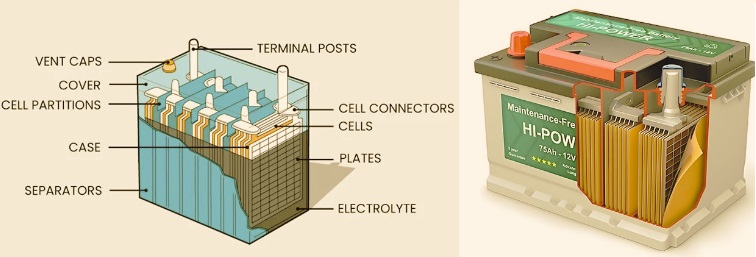
- Lead acid battery is a common type of battery that is part of different projects like backup power systems and electric vehicle batteries.
- It comes with a simple design and less cost, make them the best for electronic devices. A conventional lead-acid car battery comes with liquid electrolyte that flows in the battery structure.
- It is commonly used for vehicles since it has a simple design and a low cost.
- Lead batteries are best for standard power applications.
Features of Lead Acid Batteries
Low cost
- Lead acid batteries are lower cost than AGM batteries and best for projects where the budget is low.
High Capacity
- Lead acid batteries come with high capacity compared to AGM batteries having similar dimensions. It stores high energy and is best for projects where a longer operation time is needed, like off-grid power systems.
Availability
- This battery is easily available and easily found at stores. These easy-access features make them the best for challenging projects.
AGM Battery vs Lead Acid
Manufacturing and Cost
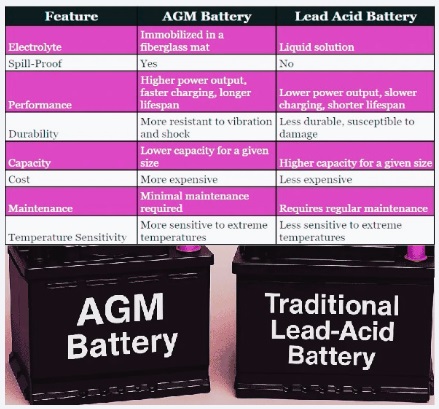
- An AGM battery is a lead-acid battery that comes with special design features. Glass mats absorb the electrolyte of AGM batteries, which makes these batteries highly resistant to vibrations and spill-proof.
- Its manufacturing is a complicated design compared to lead-acid batteries since it uses a liquid electrolyte for chemical reactions in the plates of the battery.
- Since it has an advanced structure, an AGM battery is more expensive compared to flooded lead-acid batteries.
- Its high cost makes it highly efficient, reliable, and safe to operate.
- While lead acid is low-cost and easy to make, and has a budget-friendly design for different projects where cost is low
Performance
- agm batteries peform well than conventional lead acid batteries.
- agm battery is longer working life and a durable design. It has high resistance to vibrations from discharge and manages high charging cycles without affecting capacity.
- agm battery has high-speed charging compared to lead acid battey. so preffered for marine and RV projects that needed fast recharging.
- agm batterisare sealed design, so connected in any configuration without leaking. Conventional lead acid batteires needed protection from spillage.
Maintenance
- AGM batteries are maintenance-free and do not need water refilling or acid level monitoring, so they are easy to use.
- Lead-acid batteries need high maintenance. It needed regular checking for proper electrolyte level.
Lead Acid Batteries Limitations
Safety factors
- A liquid electrolyte is a conventional lead-acid battery that faces safety hazards. Spills cause an effect on connected devices, resulting in health hazards and needing a special maintenance method.
Performance
- A lead-acid battery comes with lower power and a shorter working life than an AGM battery. It is not preferred for applications where longer time power is needed.
Maintenance
- A conventional lead-acid battery needs proper maintenance, like adding electrolyte levels and cleaning terminals. It is a difficult and time-consuming process, like installations where it is difficult to access.
Less durable design
- Lead acid batteries are less durable compared to AGM batteries and are affected by damp vibrations and bad weather conditions. It reduces working life and is not preferred for faulty conditions.
Slow charging process
- Lead-acid batteries take more time for the charging process compared to AGM batteries since they have less conductivity. It is a limitation for projects where high-speed charging is needed, like emergency power operations.
AGM Batteries Advantages
High Safety:
- Its electrolyte immobility features minimize chances of leaking and spills, and AGM batteries safely operate compared to conventional batteries. So it is best for applications where confined spaces exist, for battery spills to cause damage.
Good Performance
- An AGM battery is a high-power-output module and provides high energy compared to a conventional lead-acid battery. It is well-suited for demanding projects where a sustained supply is needed, such as vehicles or solar systems.
longer life
- agm battery has immobility electrlyte, so it faces less corrosion and other damages. That helps increase the working life needed needed less maintenance and minimizes cost.
Durable design
- Its design is strong, and the electrolyte has features for managing shock. So, it’s best for applications. where movement is needed, such as off-road vehicles.
high speed Charging
- AGM batteries have high-speed charging features since they have high internal conductivity.
How to Choose an Accurate Battery
High-Performance Vehicles
- AGM batteries are best to power high-performance vehicles like boats, racing cars, and motorcycles since they have high power output and also manage heavy loads.
Deep Cycle projects
- AGM batteries are best for deep-cycle projects like marine batteries, solar power systems, and electric golf carts since they easily handle deep discharge without any degradation.
Safety-based Applications
- Its spill-proof design is useful for applications where safety is the main factor, like backup power systems, medical devices, and emergency light systems.
Off-Road Vehicles
- AGM batteries have a durable design and high resistance to vibrations for reliable operation on off-road vehicles, as well as a heavy-duty design.
High-Demanding Applications
AGM batteries have high-speed charging features, so they are preferred for demanding recharging projects like emergency power systems.
Is an AGM battery a lithium or lead-acid battery?
- An AGM battery is a lead-acid battery, so an AGM lithium battery does not exist. AGM batteries come with sealed lead-acid (SLA) battery features.
- So AGM batteries needed less maintenance and did not face electrolyte leaking faults. The lithium battery does not need maintenance and is lightweight compared to an AGM battery for small projects since it has a higher energy density.
Do AGM batteries have a longer working life than lead-acid batteries?
- AGM batteries work longer compared to conventional lead-acid batteries. AGM batteries have lower self-discharge rates, so they hold low capacity for longer times and are also not connected in the circuit.
- So the self-discharge rate for a lithium-ion battery is less, like 3.5% per month.
- AGM batteries work longer, about 7 years, and standard lead-acid batteries have a working life of 3 to 5 years through accurate handling.
Disadvantages of an AGM battery compared to a flooded lead-acid battery
- An AGM battery is more costly than a flooded lead-acid battery. AGM batteries have a sensitive nature for overcharging. so it can be quickly damaged, so it is best to employ smart chargers on conventional chargers.
Are AGM batteries better than lead-acid batteries?
- Yes, AGM batteries offer high features as discussed above compared to lead-acid batteries.
Can AGM batteries be replaced with lead-acid batteries?
- Yes, it can be done for replacing an AGM battery with a lead-acid battery. But before replacing the battery, check that the battery thatbatteryvoltageand operating capacity are the same.
Do AGM batteries use a special charger?
- Yes, a certain charger is used for charging an AGM battery. since if another charger is used for AGM battery charging, it can be damaged. Since an ultra-fine glass fiber separator is employed in an AGM battery, high voltage can affect the internal separator, so it is best to use a dedicated charger for AGM battery charging
AGM or lithium battery—which one is better?
Each has its own advantages; a lithium battery has a longer working life compared to an AGM battery. But the lithium battery operates better compared to the AGM battery.
- Lithium batteries work longer compared to AGM batteries, and AGM batteries have sensitivity for overcharging, and lithium-ion batteries follow BMS cut-off methods that prevent the battery from getting damaged from overcharging and overdischarging.
- An AGM battery has less density compared to a lithium battery. So lithium batteries are lower in weight, smaller, and less dense than AGM batteries.
Are AGM batteries safer than flooded?
- A flooded battery results in the release of gases like oxygen and hydrogen when charging and discharging occur.
- Proper ventilation is used for avoiding generation of hazardous gases. The liquid electrolyte of flooded batteries causes leakage with corrosion if accurate maintenance does not occur.
- An AGM battery offers recombination features that mix gases generated at the time of charging.
- This process minimizes the release of hazardous gases, which makes AGM best suited for use in closed spaces.
- The sealing design of the AGM battery minimizes electrolyte leakage and corrosion.
Conclusion
through making a comparison between a lead-acid battery and an AGM battery, based on certain requirements and cost. AGM batteries have good working performance, longer life, and low maintenance with high cost. Lead acid batteries are best since they have a spill-proof structure and a high-speed charging time. While lead-acid batteries have good operation for different applications since they need low-cost operations.