End-cutting pliers are special manual-operating tools employed for cutting, trimming, pulling, and removing different materials like nails, staples, wire, and pins in confined spaces. In this tutorial, we will cover details about end-cutting pliers and practical use. So let’s get started.
What Are End Cutting Pliers?
End-cutting pliers’ other names are “end cutters,” “end nippers,” or “carpenter’s pincers”; these manual hand tools come with cutting edges at 90 degrees to the handles.
Compared to diagonal cutters, end-cutting pliers’ jaws are forward, which helps to make easy cutting of material on the surface. Its design helps to cut edges for reaching material easily over the top, providing clean and controlled cutting.
Its structure comes with two forged steel handles, a pivot joint, hardened cutting jaws, and grip coating or ergonomic handles.
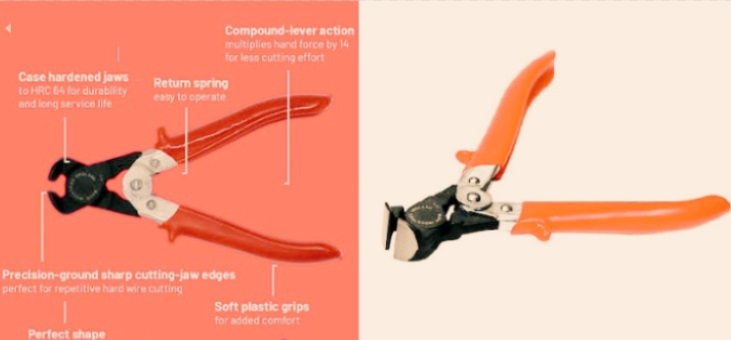
Structure of End Cutting Pliers
There are different parts of end-cutting pliers, and each comes with certain applications.
Cutting jaws
Jaws come with hard cutting edges that help to shear different materials. Common features are Induction-hardened edges, precision-ground surfaces, and heat-treated steel. These features ensure proper cutting.
Pivot joint
Pivot joints transfer force during operation. So if it works well, it offers smooth operation, less wear, and improved cutting efficiency.
Handles
• The handle provides easy control and comfort while working; its design comes with non-slip grips, ergonomic contours, and shock-absorbing materials. These features help perform repetitive tasks and operations.
Also Read: The Engineering Knowledge
End Cutting Pliers: Different Types
Different features are needed for different types, and each comes with a certain design.
Standard end-cutting pliers
It is a common type of standard end-cutting pliers that are used for, general repairs, carpentry, and construction.
High-leverage end cutters
It comes with a properly optimised design for high cutting force, and its main features are using less hand effort, high cutting power, and greater productivity.
Mini end-cutting pliers
It has a compact design and is part of applications for high accuracy, electronics circuits and good mechanical work.
Heavy-duty end cutters
It is best for industries and comes with forged-steel construction, hardened jaws and reinforced pivots.
Function of End Cutting Pliers
End-cutting pliers are used for different industries and perform certain functions.
Cutting wire
• The main uses of end-cutting pliers are wire cutting and trimming close to the surface. The main features are reinforcement wire, fence wire, binding wire, and electrical wire.
Forward-facing jaws provide clean cutting with less protrusion. That is important for projects, safety, and projects where a smooth surface is needed.
Removing nails
Carpenters also use end-cutting pliers for removing nails. Common processes are gripping the nail head and levering the nail out.
This feature reduces damage and provides high extraction force. An end cutter provides good working during nail removal.
Pulling staples
Furniture restoration also needs end-cutting pliers for staple removal. Its common uses are upholstery repair, furniture refinishing, flooring removal, and packaging dismantling.
Jaws grip staples strongly and remove them with minimal damage to neighboring material.
Trimming fasteners
Different manufacturing functions needed high material for trimming fasteners. such as rivets, pins, locking wires, and cable ties.
End-cutting pliers help for fast and safe removal of protruding parts.
Cutting reinforcing wire
Construction applications use reinforcing steel bars that are strongly connected with tie wire. These pliers provide twisting tie wire, cutting extra wire, and removing wire during repairs.
The tool structure is helpful for use in construction projects.
Electrical applications
- Electronics applications also employ end cutting pliers for different operations like cutting copper conductors, trimming cable ties, and removing securing wire.
Industries where End Cutting Pliers
End cutting plier also part of different industries
Construction
- In the construction sector, they perform different operations such as Concrete reinforcement, Framing, roofing, and Formwork. End cutters are also used for nail removal
Woodworking
- Woodworkers employ end cutters for trimming purposes, furniture repairing Nail extraction. their features reduce wood surface affecting
vehicle repair
Vehicle technicians employ end-cutting pliers for cotter pin removal, wire trimming, and fastener extraction
Different maintenance methods come with components that are better for end-cutting operations.
Manufacturing industry
Industrial manufacturing features use end-cutting pliers for assembly quality and component finishing. These tools provide highly accurate work.
Metalworking
Metal manufacturers use end cutters for wire trimming and rivet sheet metal assembly.
Selection factor for end cutters
Different factors must be considered before selecting an end cutter.
High leverage
When cutting through hard wire and nails, hands get tired. It is best to use a tool that has a high force multiplier and helps to provide easy repetitive cutting.
Hardened cutting edges
Not use a cutting plier pair that is blunt after some time, so use an HRC value for working longer. HRC 64 is best to use.
Return spring
Using a return spring reduces working time and energy through resetting the tool at the starting position.
Cutting capacity
Select a tool with a strong and manageable wire needed for cutting. Accurate working tools help to handle 2 mm diameter hard wires.