If it occurs in a working refinery or petrochemical complex, the complication results in the clock starting to operate. Any abrupt shutdown increases revenue, affects supply chains, and causes regulatory compliance damages. Restarting faulty features without proper technical evaluation does not lead to recovery. that affects personal as well as enhanced expenditures
So it is important to post the post-fire API 579 assessment as the preferred option for required functionality for the different hydrocarbon processing industries.
Why is fire-damaged equipment difficult to inspect?
The main misconception exists when any incident occurs; if steel is intact, it means it is. Field experience shows different details.
Carbon steel facing temperatures more than 400 degrees face microstructural variations that are not easily detected in visual inspection.
Creep damage, carbide precipitation, grain coarsening, temper embrittlement, and reduced mechanical features below the surface look normal.
Fire affects pressure vessel assessment, needing hardness mapping and metallographic replications for permanent deformation, and a proper structural analytical framework makes a connection for calculated damage with retaining structural capacity.
API 579-1/ASME FFS-1 offers a framework and is used accurately, needing deep technical features and field judgment made with time for actual casework.

Role of API 579 in Refinery Fire Damage Assessment
API 579 gives different assessment techniques that are used for instruments that are facing working conditions other than the original design area. Fire occurrence is a difficult exposure.
For refinery fire damage assessment, the standard explains.
Level 1 screening for finding factors that fit or do not fit for continued service, offering fast triage of larger instrument factors
In level 2 analysis of incorporating real material property degradation, corrosion detection, distorted data, and thermal exposure profiles were made with the help of forensic evidence.
The 3rd level shows advanced assessment with the help of finite component analysis for complicated geometries, local damage patterns, and life predictions with future operating loads.
What separates competent FFS work from checkbox technical has features for reconstruction that occur with fire, not documents that are shown after it. Flame impingement patterns, exposure time, cooling rates, and interaction between thermal and pressure loads all added into the assessment that plant working staff use it for working purposes.
Petrochemical Fire Damage Assessment
For petrochemical features, the damaged footprint increases to vessels and piping. Structural steel, pipe compatibility, foundation systems, electrical and instrumentation conductors, and relief systems need proper evaluation.
Petrochemical fire damage assessment is needed to show the configured system, since the vessel that follows FFS evaluation is reliable for supporting structure management in its position, and a relief path provides protection from overpressure.
Ideametrics Global Engineering brings this systems-level perspective to each post-fire management, offering individual components assessing methods assigned to coherent plant-wide restarting planning.
Post-Fire Engineering Services: Accelerate Restart
Speed is an important factor for industrial fire recovery techniques, but speed without proper techniques causes damage. An effective method is a combination of fast field mobilization with regular assessment protocols for parallel working compared to sequential bottlenecks.
Accurate application of postfire device evaluations occurs with this sequence.
Instant field survey and triage for defining equipment into replacement and assessment, clear for service groups. that can work for many days based on detailed engineering details where normally needed.
Thermal exposure reconstruction with physical details like paint discoloration charts, zinc galvanizing, thermocouple data, and polymer degradation shows details.
Material property identification with field hardness testing, in situ metallography, and sample removal for laboratory tensile and impact testing.
Structural and remaining working life analysis using API 579 methods defined to certain damage system identification. Proper fire damage remaining life checking is considered for pre-fire device instruments, not like the post-fire state.
Documentation and regulatory interfacing generate assessment details that fulfill the requirements of jurisdictional authorities, with internal management of varying requirements simultaneously.
That is the main factor that industry quality assessment services offer when applied through engineers who perform work repeatedly over different types of fire scenarios.
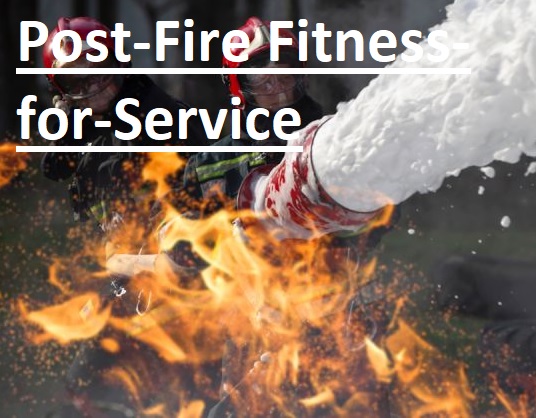
Why Industrial Restart Engineering Services Need Specialized FFS Expertise
General mechanical engineering companies easily perform the inspection process. Normally, FEA consultants make stress models with industrial restarting engineering services that follow the main fire occurrence demand for certain intersections of skills, API 579 fluency, metallurgical effects mechanism features, field inspection detailed in degraded and hazard conditions, and engineering assessment ability for making fit-or-replace decisions that manage operational and safety outcomes.
Understanding of real details about Fitness-for-Service shows that engineering techniques are the main point. That is not making calculations but proper inspection data integration, structural analysis, material science, and risk-based decision features.
Growing requirements for post-fire FFS capability
The aging structure of long-term terminals, refineries, chemical plants, and power generation systems shows that fire occurrence highly affects devices working with accumulated service damage. Corrosion, hydrogen damage, fatigue, and previous thermal cycles cause a baseline condition that complicates the proper post-fire assessment.
With that, regulatory requirements also tighten, blanketing hydrostatic testing like a proxy for fitness for service not needed for different areas.
Quantitatively, engineering is considered the standard; organizations working for global industries define that pre-qualifying FFS engineering features before an incident occurs is highly effective compared to scrambling to find proper resources in the immediate aftermath.
Ideametrics Global Engineering
Post-fire fitness-for-service assessment, not the service line that applied. It needed proper methods, technical staff, analytical tools, and functional maturity to operate under the pressure of a facility that needs to restart safely and effectively.
Ideametrics Global Engineering has built post-fire engineering services practices around these requirements, offering API 579 assessments that are technically defensible, practically workable, and configured to meet the urgency of post-fire recovery.
When the fire is out, the real engineering begins.