CNC milling machines and computer numerical control machines are main parts of industry production. CNC technology offers quality manufacturing processes that fulfill the requirements of manufacturing systems. There are many features of the CNC process, so all industries are using them. Manufacturers needed advanced CNC technologies that enhance manufacturing speed cost-effectively.
In this post, we will cover details about CNC machining, different types, and their practical operations. So let’s get started.
What is CNC machining?
- CNC machining is a subtractive technique that helps remove solid working material with programmed machine devices.
- It’s also used where custom metals are needed through accurate precision with repeatability.
- For manufacturing low-volume manufacturing components, CNC machining is a high-speed and practical option.
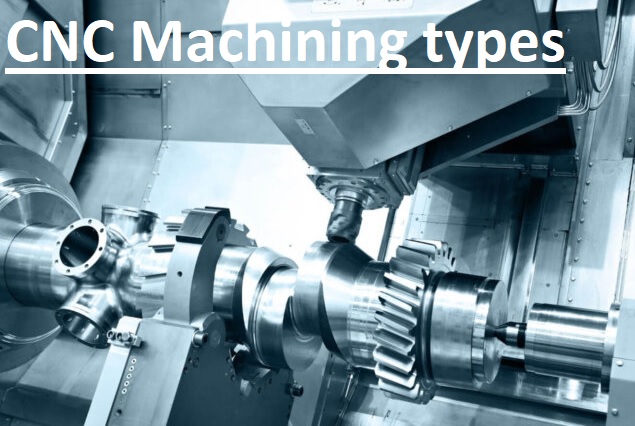
Different Types of CNC Machines
There are different types of CNC machines that are mostly used based on the design and working of CNC machining. Advanced manufacturing needs accuracy, high speeds, and flexible operations, which are achieved through CNC manufacturing techniques.
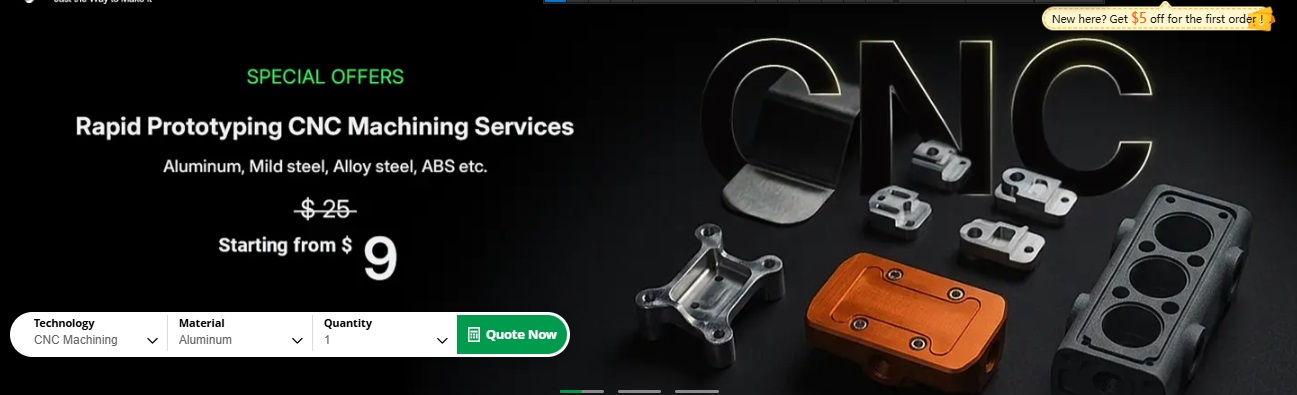
Justway provides advanced CNC machining features for rapid prototyping and mass production, helping to convert designs into required functional materials with accuracy.
Through an automated machine system with programmed G-code, CNC processes provide consistency, repeatability, and required tolerances for complicated geometry for industries like vehicles and aviation.
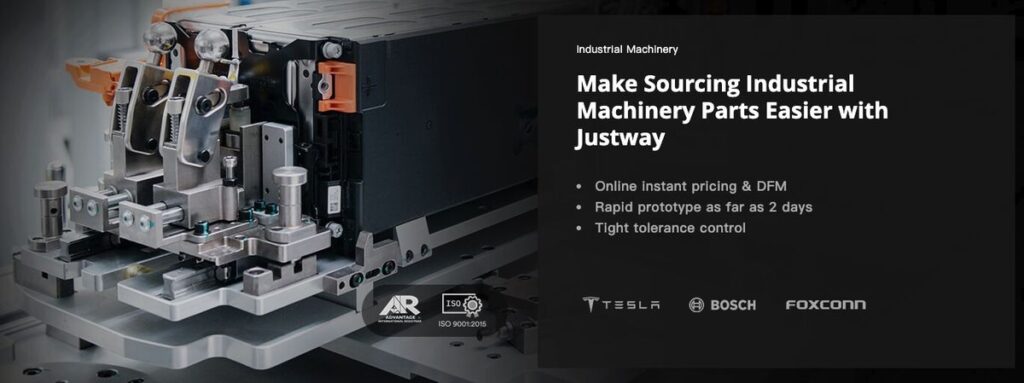
Some features are
On request
- Full dimensional inspection report
- Material/mill test report
- ISO9001, ISO14001, ISO27001 and IATF 16949 certifications
- First article inspection for orders of 100+ units
- Certificate of Conformance
- REACH
- Material Test Reports
- Material Certificates
- RoHS
Different CNC machining materials they offered, like
Metals
- Aluminum (6061, 7075, 5052)
- Stainless steel (304, 316, 303)
- Brass, Copper
- Titanium (Grade 5)
- Mild steel, Alloy steel, Tool steel
Plastics & Composites
- ABS, Nylon, Polycarbonate (PC)
- POM, PTFE (Teflon), PEEK
- Acrylic (PMMA), Polypropylene (PP)
- FR4, Bakelite, Rubber
- Carbon Fiber
with high precision with standardized tolerances are
| Size Range | Metal Tolerance | Plastic Tolerance |
|---|---|---|
| 0.5–3 mm | ±0.1 mm | ±0.2 mm |
| 6–30 mm | ±0.2 mm | ±0.5 mm |
| 30–120 mm | ±0.3 mm | ±0.8 mm |
Some CNC machine types are as
CNC Milling Machine
- CNC milling machines employ cutting tools that remove working component materials, making it an accurate design based on requirements. Working materials are set at a point, and high-speed rotation cutting removes materials.
- CNC mills come with different cutting tools that provide different operations. Some cutting instruments are face mills, taps, end mills, and drills. These machines have vertical and horizontal structure.
CNC milling machines uses
CNC machining’s common uses are signage, cabinets, furniture, prototype models, and musical instruments.
CNC mills’ limitations
- CNC milling is commonly used for providing operations easily with high-speed manufacturing through accurate CNC machining. But it has some limitations.
Size
- A CNC milling machine has limited size features that are machined through employment. Size is normally based on the travelling distance of the tool and the enclosing size.
Skill:
- Users of CNC mills needed accurate skills. Since minor errors cause errors in accuracy and affect designs
Cost:
- There are high starting charges for CNC milling machines that limit its uses. Either of the costly processes increases CNC machining precision and accuracy more than other processes.
CNC Router Machines
- CNC router is used for cutting different designs of flat material. These machines are replacements of different manual devices employed for metalworking and carpentry, like boring machines, panel saws, and spindle molders.
CNC Router applications
- It has features for CNC routers for cutting complicated designs, so it is used for molding, door carvings, signage, and carved wood furniture.
CNC Routers application
- CNC routers come with different components like the extraction system, the spindle, and the vacuum system. The working of machines produces a high noise level.
- CNC router working conditions come with high wood dust or metallic dust
CNC Plasma Cutters
- CNC plasma cutting machines help to make accurate cuts. that employs electrical discharge arc for air ionization and material melt where the arc occurs. so operated with an electrical arc, and this method is applicable for electrically conductive materials.
CNC plasma cutters use
- Its common uses are as automobile manufacturing, manufacturing shops, automotive repairs, and salvage and scrapping
CNC plasma cutters’ limitations
- Plasma cutting performs cuts on metals and conductive alloys. So limit breakers to use where wood, plastics and wood machining materials occur.
- Plasma cutting: hot cutting methods that operate by melting the material. Heat is released visibly over heat-affected zones (HAZs) on the cut area.
CNC Lathes & Turning Machines
- CNC lathe machines operate through rotating material over a central axis; cutting is used over working components for removing materials and making the required design. CNC lathe machines make finished products fast with accuracy compared to manual lathes.
- CNC lathe machine preferred for cutting, facing, sanding, turning, and knurling processes. CNC turning process: non-rotary tools linearly move over rotating working components to create a spiral cutting area.
CNC lathes use
- CNC lathe machines are used for different manufacturing systems for making different components: camshafts, automobile parts, gun barrels, baseball bats, crankshafts, dining tables, and furniture legs.
Limitations of CNC Lathes
- Normally CNC lathes make symmetrical parts according to the shaping material’s design. So these machines do not make asymmetrical shapes.
CNC Laser Cutting Machine
- CNC laser cutter operates over a laser beam for cutting material sheets. CNC laser cutter machines and devices cut with high accuracy compared to plasma cutting. A CNC laser cutter is also used for limiting conductive materials, while a solid-state laser cuts different materials.
CNC laser cutters use
- Its common uses are aerospace parts, medical equipment, automobile frames, and engraved materials.
CNC Laser Cutter limitations
- Laser cutting machines have a limit for material cutting thickness. With that, there is a need for qualified operators for working with laser cutting machines. Since unskilled workers operating it causes danger, users must know their working since the laser beam moves on working components.
CNC Electrical Discharge Machines
- (EDM) operates like plasma cutting with a helping electric arc for material removing at a certain point. These techniques make high-speed 2D cuts for metallic sheet design.
CNC Electrical Discharge Machines
- Its common uses are as manufacturing injection molds, die casting, blanking punches, and prototyping.
CNC Electrical Discharge Machines limitations
- CNC electrical discharge machine working for conductive material. This method is not used for ceramics, wood, machining plastics, and nonconductive materials.
- EDM machine slow speed on corners and curves since high electrode wear occurs through recurring electrical discharge, causing a high cost and slow speed manufacturing process.
CNC Waterjet Cutting Machine
The waterjet CNC machine employs a thin water jet for cutting materials. CNC waterjet cutting is an important process since it has features for working with material. A multi-axis CNC waterjet cutter has 3D cutting features. With that, the material’s thickness best for waterjet cutting is high.
CNC waterjet cutting uses
- Its common uses are as foam, paper, ceramic, glass, and sheet metal cutting; in the aviation industry; and in general fabrication.
CNC waterjet cutting limitation
- CNC water jet cutters are slower processes than others. Slow speed occurs at corners and curved cuts. Waterjet cutters operated with ultra-high-pressure jets. Using an improper quality waterjet system cutter can damage
CNC Grinding Machines
- A CNC surface grinder is employed for CNC grinding techniques, employing rotating ceramic-blend grinding wheels for eliminating materials for finishing, sanding, and polishing. Diamond grinding wheels offer quality secondary finishing.
CNC grinders use
- Its common uses are for high-precision gears, vehicle parts, medical components, the aviation industry, and tooling.
Limitations of CNC Grinders
- CNC offers accurate material removal with a slow rate, so it is not used where materials have specific shapes and is used for finishing and surface smoothing
CNC Drilling Machine
- CNC drilling is a commonly used CNC machining process for workshops. That is best for drilling holes for materials, screws, and aesthetic features.
CNC drilling machines use
- Its common uses are as engineering machinery, automobile manufacturing, shipbuilding, and astronautics.
CNC Drilling Machine limitations
- • The dimensions of a hole made with CNC drilling have limited value since this technique does not make deep holes. With that different diameter for drill holes, use certain-sized drill bits.
Automatic Tool Changer
- • An automatic tool changer is a category of CNC machine types. Those features help for automated variations of machine cutting instruments preferred for high-speed manufacturing with less downtime.
- ATC is employed for switching cutting tools for CNC machines or replacing damaged tools. It enhances automation degrees for manufacturing processes. Tool variation is the main limit for some CNC machines since ATC increases working features for CNC equipment.
Types of CNC Machines acording to Number of Axes
- CNC machines are defined according to number of axes. Multiaxis machining is CNC machining that comes with different axes for movement to get complicated designs and tight tolerances. CNC milling machines are common types based on axes.
2-Axis CNC Machine
- 2-axis CNC machines: basic CNC system. that comes with 2 axes of motion, like the X-axis (vertical axis) and the Y-axis (horizontal axis).
- These machines are used for making straight-line cuts on materials. These machines operated on static working materials.
3-Axis CNC Machine
- 3-axis CNC machines are common; they have 3 axes of movement, X, Y, and Z (depth axis), and can machine the basic parts in 2.5 dimensions.
- It operated over 6 surfaces for square or rectangular-shaped material, but blocks needed repositioning. These machines were employed for static components.
4-Axis CNC Machine
- 4-axis CNC machines like 3-axis machines. With 3 axes, x, y, and z, it comes with a fourth axis of rotation. That helps rotate the cutting tool movement over the x-axis, called the A-axis. The working materials also moved over similar axes. These machines are best for cutouts and cutting
5-Axis CNC Machine
- 5-axis machines provide pivoting movement for cutting tools over the y-axis. The axis of rotation pivoting called the C-axis.
- These machines are used for making complicated and accurate components since they have features for operating with different surfaces of material without changing the position of the working area. High accuracy helps to make machines applicable for the aviation industry and medical devices.
6-axis CNC Machine
- 6-axis CNC machines offer a 3rd rotary direction for the cutting tool called the B axis. These machines make the design of surface finishes with certain movement directions for cutting devices and working materials.
- These machines are part of the aviation industry, the medical tools, and the military industry
7-Axis CNC Machine
- 7-axis CNC machines with 3 conventional axes of movement for cutting tools, 3 axes to rotate material, and a 7th axis for a rotation arm holding cutting devices. That axis is known as the E axis. These machines are part of the aviation industry and medical devices.
9-Axis CNC Machine
- These machines come with a combination of a CNC setup 5-axis milling machine and a 4-axis lathe machine. Milling machines operate over the surface for making surface finishes, and lathes finish internal features of working materials.
- So a 9-axis machine helps to make internal and external designs. These machines help make surgical tools and the complicated aviation industry.
12-Axis CNC Machine
- 12-axis CNC machines are complicated machines for industry and become overskilled for different industries. These CNC machines come with 2 cutting head moves for 6 axes: X, Y, Z, A, B, and C. These machines provide accuracy and control speed in the manufacturing process.