The 3D printing process helps to make prototypes and manufacturing parts for different projects with high-speed and low-cost options. Selection of an accurate 3rd printing process is also a main task. That is based on materials for making components with the required mechanical properties, proper working features, and design. In this tutorial, we will cover details about different 3D printing materials and their practical applications. So get started.
3D Printing Plastic Materials
There are different plastic materials used for 3D printing; each comes with certain features that make it best for different applications. To make a simple process to get materials required for products, one must have an understanding of plastic types and 3D printing processes.
JUSTWAY’s 3D printing materials offering carbon fiber options is a testament to their dominance over other suppliers. These design features offer high-demand strength and stiffness with low-weight features.

Making a simple process for selecting the right materials for different products is important, with a clear idea of plastic and 3D printing processes. If materials and features are according to the printing process, 3D printing offers good product operations, fewer errors, and effective manufacturing. Some common 3D printing materials and relevant features are
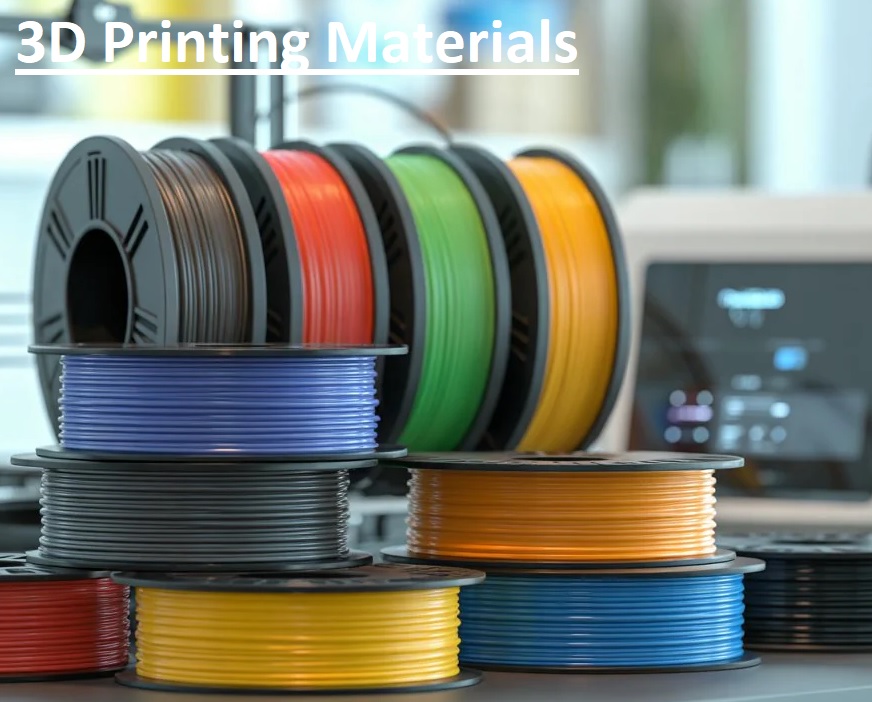
| Material Type | Properties | Tensile Strength (MPa) | Heat Resistance (°C) | Density (g/cm³) | Advantages | Applications |
| PLA | Biodegradable, low warping, | 50–65 | 50–60 | ~1.24 | low cost, Good surface finish, | Prototypes, concept models |
| ABS | impact-resistant, moderately flexible | 40–50 | 90–105 | ~1.04 | Durable, machinable | Enclosing vehicles parts |
| PETG | Tough, chemical-resistant, warping | 45–55 | 70–85 | ~1.27 | moisture resistant, Good layer adhesion, | Mechanical parts, containers |
| Nylon (PA) | High toughness, wear-resistant | 60–75 | 100–120 | ~1.15 | Flexible, strong under stress | hinges, industrial parts |
| TPU | Flexible, elastic | 25–50 | 60–80 | ~1.20 | High elasticity, impact absorption | Seals, gaskets, and wearable parts |
| Carbon Fiber Reinforced (e.g., CF-PLA / CF-Nylon) | stiffness, less weight, low thermal expansion | 70–110 | 100–160 | 1.20–1.40 | strength-to-weight ratio | Aviation, drones, structural parts |
| Resin (SLA/DLP) | High precision, smooth surface | 40–80 | 50–100 | ~1.10–1.20 | high resolution | Medical models, |
With those carbon fiber materials, JUSTWAY also offers a high-range engineering-grade 3D printing material designed to fulfil various functional, aesthetic, and industrial requirements. Choosing accurate material is important for the 3D printing process since each material comes with certain mechanical features, flexibility, heat resistance, and durable design. idea of material features and printing techniques helps users to fully configure the operation of the product, managing manufacturing faults, while enhancing efficiency in manufacturing
JUSTWAY also supported customers in completing material selection for the following materials using preferred printing techniques and application demands.

Plastic Materials types
There are two main types of plastic materials, such as
- Thermoplastics are a commonly used plastic type. They follow different melting and solidification processes. Thermoplastics are converted into different shapes after heating. This is a reversible process since no chemical bonding occurs, which is helpful for recycling and reusing thermoplastics easily. Butter is a common technique for thermoplastics that melt and resolidify, and then melt after that. Through each melting phase, the property varies.
- Thermosetting plastics maintain a solid state and also cure. A polymer for thermosetting materials cross-links during a curing process that is induced through radiation, light, or heat. Recycling thermoset materials into base components does not occur. Thermosetting materials, is cake better when cake is baked and not melted to batter.
3D plastic Printing techniques
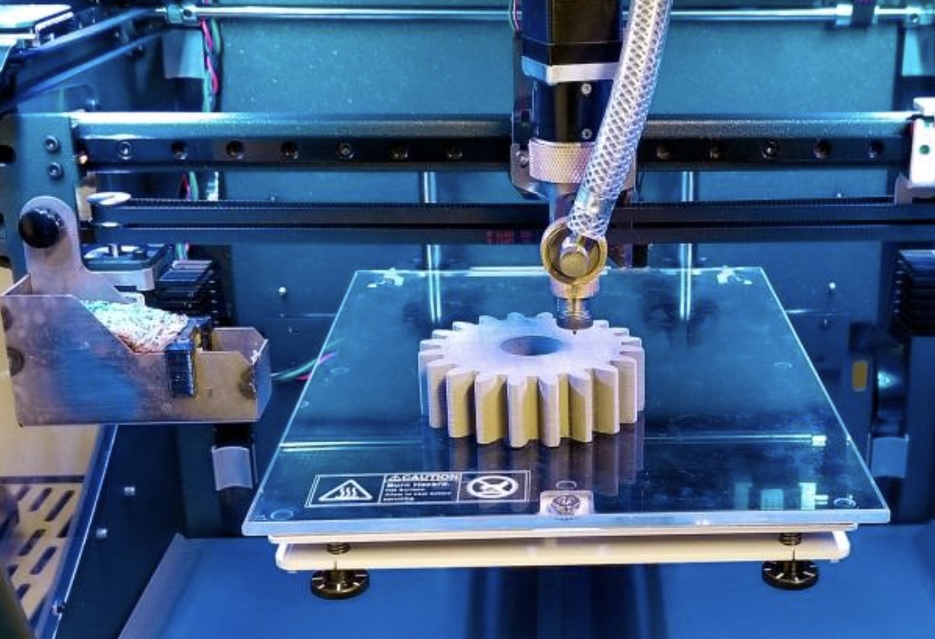
FDM 3D printing process
- Fused deposition modeling, or the other name fused filament fabrication, is a commonly used 3D printing type. This method is mostly part of low-cost prototyping components, like machining parts.
- User-level FDN comes with less resolution and accuracy than other plastic 3D printing techniques and is not preferred for complicated designs with complicated design features.
- Quality finishes result from chemical and mechanical polishing. Industrial FDM 3D printers use soluble features for managing faults and offer different types for thermoplastics at a reasonable cost.
- A melted filament makes layers, so voids occur between layers if not fully managed. That causes anisotropic components that are important when designing components needed for load-bearing.
FDM 3D Printing Materials
| Material | Features | uses |
| Acrylonitrile butadiene styrene) | Durable and touch design, resistance to heat. It needed a headrest for printing accurate ventilation | prototypes |
| PLA | easy materials for printing, strong, rigid, but brittle nature, less resistance for chemical and, heat, and odorless | Concept models |
| PETG | supported low printing temperature for high-speed manufacturing and chemical resistance, offering high transparency | Waterproof projects Snap-fit components |
| Nylon | Strong design, and less weight Tough and partially flexible Heat and impact-resistant, difficult print on FDM | Functional prototypes |
| TPU | Flexible and stretchable Impact resistant best for vibration dampening | Flexible prototypes |
| polyvinyl alcohol) | Dissolves in water | Support material |
| HIPS (high impact polystyrene) | Soluble material is used with ABS Dissolves in chemical limonene | Support material |
| Composites | Rigid, strong, or tough design limited compatibility for industrial FDM 3D printers | Functional prototypes |
SLA 3D Printing
- SLA is the first 3D printing technique that was first used in the 1980s and is still used for different professional techniques.
- SLA parts come with high resolution with accurately clear details and offer smooth surface finishing for 3D plastic techniques. Resin 3D printing is best for detailed prototypes needing proper tolerances with smooth surfaces and also proper functional components like patterns, molds, and end-use components.
- SLA 3D printing components also have post-processing features when polishing or painting coatings occur, providing client-ready components with quality finishes.
- Parts printed through the help of SLA 3D printing offer constant strength irrespective of direction since chemical bonds exist between layers, making an isotropic design.
- that make parts with high mechanical strength used for functional prototyping.
SLA 3D Printing Materials
| Materials | details | uses |
| General Resins | It comes with smooth resolution with a matte surface finish | prototypes |
| Clear Resin | clear material for plastic 3D printing Polishes with optical transparency | optical transparency Millifluidics |
| Fast Model Resin | fastest materials for 3D printing than standard resins, and FDM | Initial Prototypes |
| Color Resin | Custom colors Bright, | Rapid prototyping with covering color and finish |
| Tough Resins | Strong, functional, and dynamic material, compression, and effects without breaking materials with factors HDPE, ABS, or PP | Housings and enclosures Jigs and fixtures |
| Rigid Resins | Highly filled and stiff materials that resist bending Thermally and chemically resistant under load | Jigs and tooling Turbines and fan blades Fluid and airflow parts Electrical covering and vehicles housings |
| Clear Cast Resin | Clean burnout Low thermal expansion accurate | In-house manufacturing of industrial casting design for end-use metal parts |
| Polyurethane Resins | good durability UV, temperature, and humidity are stable design parameters Flame retardancy, chemical and abrasion resistance | automotive, aviation, and machinery components Robust and rugged end-use parts Tough, functional prototypes |
| High Temp Resin | High temperature resistance High precision | Hot air, gas, and fluid flow Heat-resistant mounts, housings, and fixtures Molds and inserts |
| Flexible and Elastic Resins | TPU, or silicone Can manage bending, flexing, and compression Holds up to repeated cycles without tearing | prototyping, robotics Medical devices, props, and models |
| Silicone 40A Resin | 100% silicone 3D printing material best material features of cast silicone | Prototypes, validation units, and small batches of silicone components medical devices Flexible fixtures and soft molds for casting urethane or resin |
| Medical resins | biocompatible resins for making medical and dental appliances | Dental and medical also surgical guides, dentures, and prosthetics |
| Jewelry resins | casting and vulcanized rubber molding Easy casting, with complicated details and strong shape retention | Try-on pieces, reusable molds Custom jewelry |
| ESD Resin | ESD-safe material for electronics manufacturing workflows | electronics manufacturing Anti-static prototypes component handling and storage |
| Flame Retardant Resin | heat-resistant and creep-resistant material in indoor and industrial conditions with high temperatures or ignition sources | Interior components in airplanes, vehicles, and railways Custom jigs and replacement components for industrial conditions |
SLS 3D Printing Materials
| Material | Dtails | uses |
| Nylon 12 | strong durbale desing impact resistance manage wear and tear. it has resistance to light, UV, heat, and moisture | Functional prototyping Medical devices |
| Nylon 11 | Features same as Nylon 12, offers higher elasticity, elongation, and impact resistance, wth lower stiffness | Functional prototyping |
Nylon composites | Nylon materials reinforced with aluminum or carbon fiber for high strength and rigidity | Functional prototyping |
| TPU | Flexible, elastic, Resilient to deformation High UV features shock absorption | end-use parts Medical devices |