During online searches for SMT assembly services to complete a PCBA project, manufacturers often show their manufacturing devices to define features, and nitrogen reflow soldering is a mostly highlighted feature. Different users ask about air reflow soldering, low cost, and easy to make, so investing in nitrogen reflow soldering is necessary.
The main value of nitrogen reflow soldering is not in simply replacing air reflow but in solving basic techniques’ limitations that air reflow does not manage.
In this post, we will detail features for challenges existing in SMT assembly, show working features of nitrogen reflow soldering, and define why it is important for modern SMT manufacturing.
.
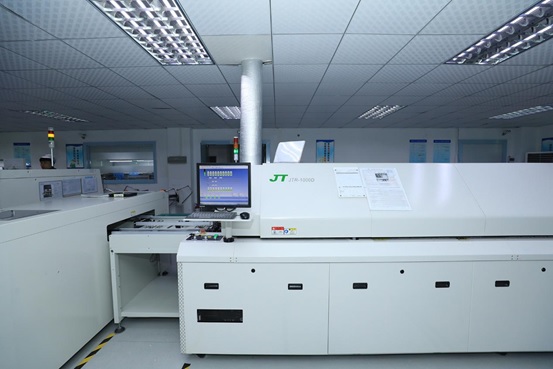
Differences Between Nitrogen Reflow & Air Reflow Soldering
- For understanding the importance of nitrogen reflow soldering, it is first important to check the basic difference from conventional air reflow soldering. The main differences exist in soldering conditions.
- Air reflow soldering employs ambient air for the soldering environment. It needed no extra protective gas, making it low-cost and easy to function.
- But oxygen in air, resulting in solder paste oxidation components, leads to high temperatures on the PCB pad; that oxidation is the main limit for air reflow soldering.
- Nitrogen reflow soldering: rapidly adding highly pure nitrogen for the reflow oven (typically ≥99.9% purity and ≥99.99% for advanced applications) displaces air and causes a low-oxygen or oxygen-free condition. Oxygen concentration is controlled to 1000 ppm and ≤50 ppm in high-end scenarios.
- That basic course oxidizes and makes stable soldering features.
- Nitrogen reflow soldering employs inert gases for oxygen isolation and reduces oxidation-based faults.
- When component sizes reduce, pitch is finer, and reliability increases; oxidation-based faults increase and make nitrogen reflow soldering important
Reason 1: Suppressing Oxidation to Improve Solder Joint Quality and Reliability
- PCB pads generally have copper and component leads (commonly tin, silver, or copper alloys) that oxidize easily at high temperatures, forming oxide layers like CuO and SnO₂.
- These oxides’ hard nature and non-conductivity prevent accurate wetting and the spread of molten solder paste. So defects like cold joints, weak solder joints, and ineffective fillets produce severe conditions where electrical connections do not work.
- Nitrogen is a chemically inert gas and does not react with metals at high temperatures. Through oxygen isolation, it avoids oxidation of pads and leads at the time of reflow. That helps solder paste for complete wetness and bonding with pads and leads, making smooth, dense, voidless solder joints with enhanced electrical conductivity and high stability
- From data-based features, oxidation-based fault ratings for air reflow soldering are in the range of 15 to 25 percent, and nitrogen reflow soldering reduces it to less than one percent.
- That enhancement is important for fine-pitch components like 0201 packages, BGAs, and QFPs, where pads are small and lead spacing is tight.
- For these conditions, also, minor oxidation can prevent proper solder joint formation.
Reason 2: Supporting the Trend Toward Fine-Pitch SMT Assembly
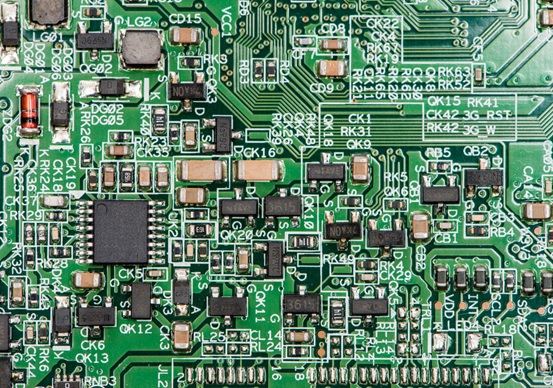
Fine-pitch components like BGAs, QFPs, and CSPs come with small pad sizes and narrow lead spacing, needing accurate solder wetting and spreading.
For air reflow soldering, oxidation affects solder flow, causing defects such as bridging and cold joints, making low product
Such as with 0.3 mm pitch QFP air reflow soldering, products are less than 80 percent, and nitrogen reflow soldering provides products over 99 percent.
For a nitrogen atmosphere, solder paste shows a small wetting angle (typically ≤30°) and high uniform spreading, offering correct filling for narrow gaps between fine-pitch leads and preventing bridging and cold joints.
Nitrogen also crosses the oxidation of tin powder for solder paste, maintaining flux activity by enhancing fine-pitch soldering yield.
With that, nitrogen reflow soldering increases lead-free soldering performances. that reduces oxidation of lead-free solder paste, controls thermal degradation of flux with high temperature, and minimizes extra flux evaporation and residue, offering stable quality with the following environmental compliance requirements.
Reason 3: Reducing Overall Production Cost and Improving Efficiency
Air reflow soldering normally shows high defect rates (commonly 5%–15%), normally for high-density and fine-pitch assemblies. Errored boards needing reworking or scrapping enhance labor and material costs and increase manufacturing cycles.
Nitrogen reflow soldering can manage defect rates less than one percent, highly reducing reworking and scrap, and reducing material losses with labor costs.
For air reflow process oxidation, work needs slow conveyor speeds and high soaking times to minimize throughput. With nitrogen reflow soldering, oxidation is suppressed, offering high line speeds and properly optimized thermal profiles. reduces reworking and shortens manufacturing cycles with enhancing efficiency.
With product assembled through nitrogen reflow soldering, it shows high stable solder joints and a longer working life that reduces downstream cost. Longer-term value is the main use for vehicle electronics, medical devices, and other devices where long-term reliability is important.
Not All SMT Assemblies Require Nitrogen Reflow
Through nitrogen reflow soldering, different features are provided; it is not important for all SMT assembly conditions. that based on product demand, components are connected to assembly density. Blind adoption causes unnecessary cost increases.
Air reflow soldering is enough for the following conditions:
- low-end consumer electronics having less reliability demand and larger component packages (0402 and above), wide lead spacing (≥ 5 mm), like basic remote controls or toys
- small batch or experimental projects without high-density, fine-pitch, or high-reliability requirements
- Leaded solder processes, where components are less sensitive to oxidation and soldering temperatures are lower
In contrast, nitrogen reflow soldering is recommended or required for:
- High-density and fine-pitch assemblies (0201, BGA, QFP)
- Lead-free soldering
- High-reliability products (automotive, medical, aerospace)
- High-volume production demands high yield and consistency
Conclusion
Use of nitrogen reflow soldering in SMT assembly is not a marketing gimmick or a superficial technology upgrade. that directly solve oxidation challenges that air reflow does not manage, configuring with industry shifting towards high-density, high-reliability design, fine pitch, and environment-based manufacturing and offering longer features for low cost and production efficiency.
Therefore, when evaluating a PCBA partner, it is strongly recommended to check if either manufacturer comes with nitrogen reflow soldering capability. Even if your current project does not require it, the presence of such equipment reflects the manufacturer’s understanding of industry trends and their technology.