Battery leakage is the release of chemicals like electrolyte in an electric battery due to the production of heat external to conditions, which occurs due to design faults, releasing extra gas or damage to the battery. Battery chemical leakage occurs through destructive corrosion for related devices and causes health issues.
Battery leakage is a common fault that affects devices, causes safety hazards, and results in wastage. Getting details of leaks and getting some preventive measures saves devices and protects environments. In this post, we will cover details about battery leakage and its effects. So let’s get started.
What is battery leakage
- Battery leakage is known as a factor that occurs during the charging process as a result of electrolyte volatilization. Electrolyte releases result in the production of a larger quantity of bubbles in the battery. Battery leakage occurs due to different causes.
- It has an impurity content in the electrolyte higher than a certain value; a high quantity of bubbles generated causes battery leakage.
- If the battery does not function in certain features, the features, when manufactured, result in a loose inner design and make more bubbles.
- Leakage can occur when the seal is not tight or the connection is weak. Alkaline batteries lose charge fast during long storage.
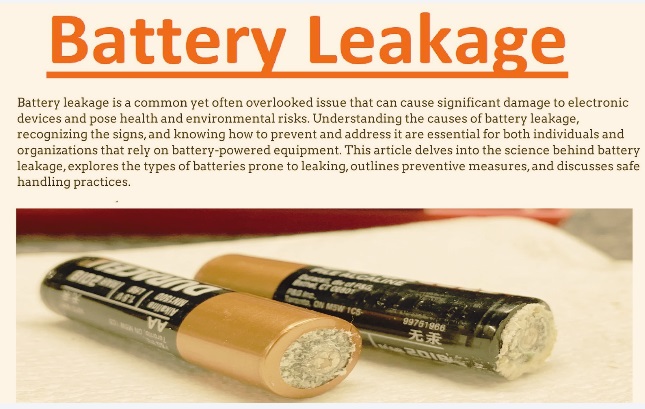
Parts of Lithium Batteries
A lithium battery comes with different components like an anode, a cathode, a separator, a casing, and an electrolyte. Each component performs certain functions but also faces some errors that cause leakage.
Anode and Cathode
- These electrodes results lithium ion flow when charging and discharging occurs. but impurity of electrode materials started chemical reactions that affect battery quality
Separator
- It is a thin membrane or layer that controls the direct connection between the cathode and anode. if the separator is damaged due to overheating or stress, it causes a short circuit and leakage.
Electrolyte
- An electrolyte is a gel or liquid that causes ion movement between electrodes. It is highly reactive in high temperatures or overcharging.
Casing:
- The external casing protects inner parts. Physical damage to the case, like dents, affects the electrolyte and causes leakage.
Causes of Lithium Battery Leakage
- Different factors cause lithium battery leakage.
Overcharging
- If the battery is charged at a higher voltage than recommended, the electrolyte can be damaged and produce heat and gas. It enhances inner pressures and causes leakage.
Physical Damage
- Any impact affecting the existing separation between the anode and cathode results in short circuits. Some signs, like dents and swelling, mean damage exists.
Extreme Heat
- High temperatures affect electrolytes and impact separators, causing leakage.
Improper Storage
- Battery storage in different temperature conditions or humid environments causes moisture that affects the electrolyte, resulting in leakage and corrosion.
Lithium Battery Leakage Sign
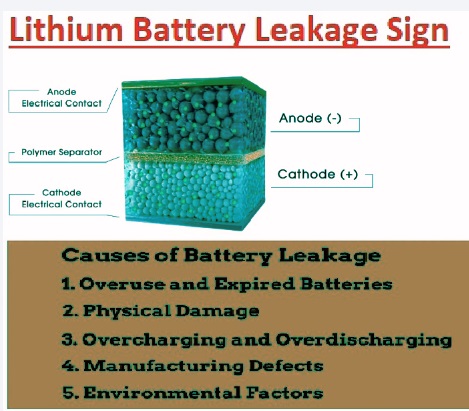
There are signs for leaking lithium batteries, which are important for avoiding damage to devices and ensuring safety. Some common signs are as
Deformation:
- Bulging, warping, and swelling of the battery casing are main signs of the generation of inner pressures due to electrolyte leakage.
Liquid Residue
- oily materials on the battery surface or other parts are a sign of electrolyte seepage. that residue releases in some coditons certain smell
Corrosion:
- white or green crystalline deposits over battery terminals mean a chemical reaction occurs between leaked electrolyte and metal components.
Performance faults
- The change in battery capacity, heating when used, or incorrect voltage reading causes internal damage through leakage.
Smell
- sharp solvent odor sign of electrolyte vapor releasing through battery
cylindrical battery leakage main causes
No gasket exists between the battery and the plate, causing leakage. These are the methods used for avoiding leakage in cylindrical batteries:
- During battery assembly, puncture metallic materials over the plate to stop leakage that occurs through metallic puncture.
- When the charging process occurs, high current is needed to avoid leakage as needed.
- Check the sealing is working during battery storage and prevent air exposure. In metallic puncture, a rubber material is needed. At this point, select “scrape” for battery leakage.
- before checking if the battery is leaking. If liquid leakage occurs, ensure a new battery is used.
How to avoid Battery Leakage
battery High-Quality
- Use quality batteries that offer reliable and leak-proof features. since high-quality battery work lasts longer but also has chances of corrosion
Battery storage
- Store batteries in cool, dry locations and not put them in locations where extreme temperatures occur, like garages.
not different from mixing brands
- Use the same battery type and battery, since mixing causes discharge and also chances of leakage.
Inspect Batteries
- Check devices that use batteries. If you find any corrosion or damage, replace the battery as soon as possible.
Disconnect batteries from unused devices.
- If the battery is not in use for a longer time, disconnect the battery. that avoids generation of gas in the battery and causes leakage
How to Clean Corroded Batteries
Follow these steps for cleaning corroded batteries.
- Use rubber gloves and safety goggles for protection from the effect of potassium hydroxide, that chemical released during battery leakage. Do not connect corrosion when you are barehanded.
- properly disconnect the corroded battery and put it in a sealable plastic bag for accurate disposal
- Lemon juice or vinegar used for neutralization of alkaline potassium hydroxide. Use a cotton swab or a toothbrush in liquid and scrub the affected area.
- Use a small quantity of baking soda in water for making paste. Use it on the corroded part and scrub to remove the residue that still remains.
- Remove cleaning agents through cotton swabs. that make devices dry before using a new battery
How to Dispose of leaking Batteries
Leaking batteries are not the best to use and also not to be thrown openly. As we see, there are many batteries in landfills; if leakage occurs, it affects the environment. So throw leaky batteries in a plastic bag and recycle them properly.
battery that is more than 9 volts, use clear tape on battery terminals for the battery to save it from generating heat and resulting in fire
How to fix a leaking car battery?
Car battery leakage is a safety-based fault that needs to be solved as soon as possible. Some steps for solving a leaking car battery are.
- First of all, follow these steps: use protective gloves and goggles for connection to the acid. Ensure that you have a properly ventilated area and windows for accurate air circulation.
- Now separate the battery from your vehicle. Use an acid-resistant container or absorbent materials over the leaking battery to control acid spreading on other vehicle components.
- For proper assessment, take the vehicle to a professional mechanic or service center for checking. since they are experts and require tools for handling battery leakage.
- They will check if the battery needs repairing or replacement.
- In some conditions, leaking car batteries require replacement rather than repair. But it is not recommended to repair a leaking car battery since the sulfuric acid of a leaking battery has a corrosive nature and causes a burning issue.
- Batteries are sealed units; trying to repair a leaking battery is not the best option.
How to Clean Battery Corrosion
Cleaning battery corrosion off remote controls, toys, and other devices helps save devices before leakage effects. cor cleaning battery corrosion, some factors needed such as
Baking soda, rubber, vinegar, eye protection, cotton swabs, and an old toothbrush
Select a ventilated area for cleaning. Use gloves and goggles for avoiding irritations resulting from potassium hydroxide, and follow these points:
- Disconnect the battery and recycle it accurately.
- Put cotton swabs in vinegar or lemon juice.
- Clean corrosion with a toothbrush for removing purposes.
- If remaining corrosion exists, use a small amount of water with baking soda. Apply this mixture on a toothbrush and apply again.
- with a damp cotton swab for cleaning residual baking soda.
- Before connecting a new battery, make the device dry properly.
Maintenance tips for the battery to prevent leakage
- Follow certain cars when not in use to avoid overcharging and discharging. If the battery is ineffective, recharge it as possible.
- Do not remove or disconnect the battery. During battery disassembly, the cathode and anode connections first, and the anode pole of the battery needs to be wrapped with insulating tape to avoid short circuits.
- During the connection of the charger for charging purposes, check that the battery is making bubbles.
- If a bubble occurs, that shows battery heat-up, and avoid charging instantly.
- For using lead-acid batteries for energy storage, give focus to reducing the connection area and time for different components.
- If it makes a connection with different devices for a longer time or is not charged for a longer time, the resulting electrolyte evaporation of the battery causes leaking.
- Try to avoid connection with the insulation layer and terminals of the cathode and anode connection wire during the charging process.
- It causes short circuits that damage the battery.
FAQ
How to safely dispose of a leaking lithium-ion battery?
- Leaking lithium-ion battery disposal causes hazardous waste. So do not throw it in the regular dustbin.
Can a leaking battery affect industrial equipment?
- Leaked electrolyte gets corroded to certain components of industrial devices. Proper inspection and accurate maintenance minimize the chance of fault.
Why should we use Large Power for custom battery solutions?
- Large power provides a lithium battery solution for proper quality, making safety and reliable features.