14 AWG wire has a rating of 15 amps that is employed for lighting and electric outlets for residential projects. This cable is an important component for small devices. Commonly used arrangements in the case of 14 AWG cables for the home are 14/3 and 14/2. In this post, we will cover details about 14/2 and 14/3 wiring and related factors. So let’s get started.
What Is 14/2 Wire?
- A 14/2 cable is commonly used wire in 15-amp circuits. Number 14 in the wire title is the wire size that is light and easy to operate, with a copper conductor constructed with a 15-amp breaker.
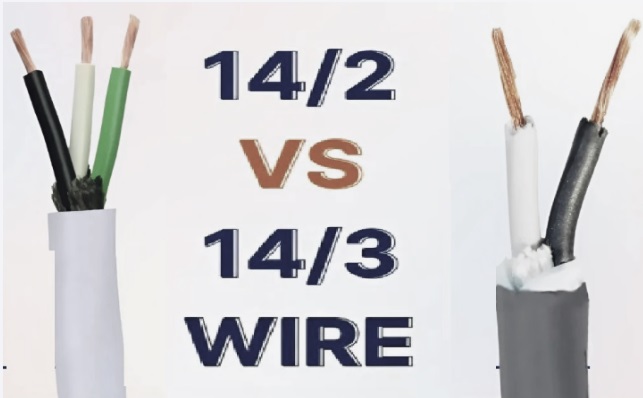
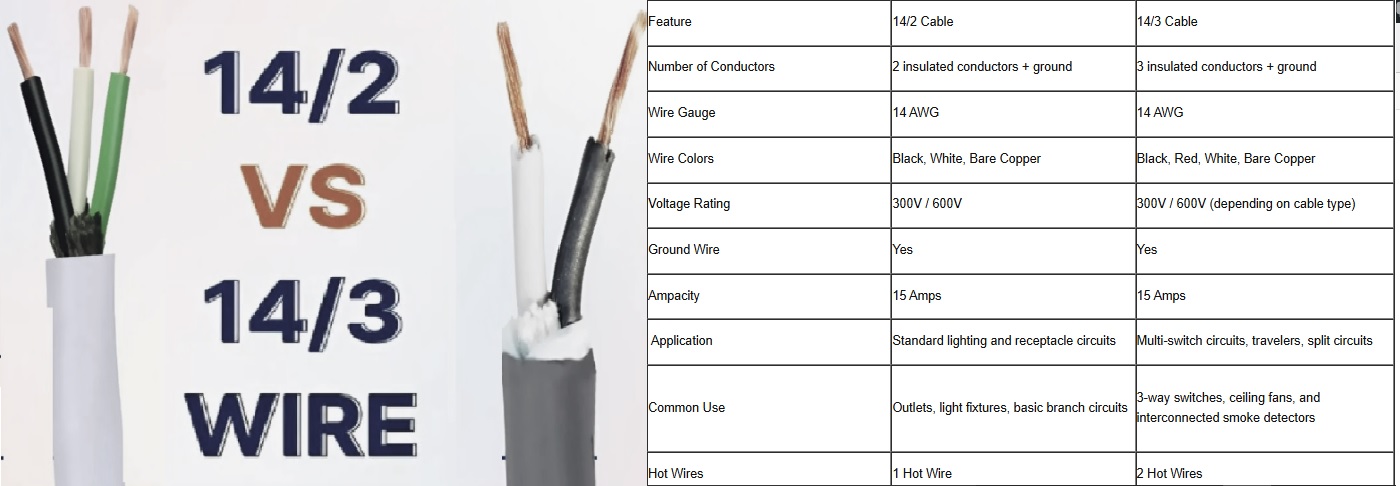
- Number 2 shows the cable comes with two undulating wires in its structure. That comes with a black hot wire power carrier, a neutral wire as power returning, and a bare copper ground.
- All wires are configured in NM-B jacket protection that is normally white with 14-gauge cable. as it comes with one single live and one neutral wire, 14/2 is employed in lighting and other small loads
What Is 14/3 Wire?
- 14/3 cable comes with 3 insulated 14-gauge copper wires with a bare ground wire and comes with a single NM-B jacket all wires are in.
- 14 number shows wire size for 15 amp circuits, and 3 shows 3 insulated wires. cable wire, you find a black hot wire, a red live wire, and a white neutral wire with a ground conductor.
- Red makes 14/3 different from 14/2 wire that provides a 2nd hot wire, helpful for handling cable with 3-way switches, fixtures with distinct controls, and split receptacles.
- 14/3 wire used when an extra live wire is needed in an advanced wiring structure
Difference between 14/2 and 14/3 cables
14/2 and 14/3 cables are commonly part of residential electrical wiring. Both come with a similar 14 AWG size with a rating for 15 amp circuits.
They come with different functions and structures and applications, and their differences are
Gauge
- These two cables come with 14 AWG wire with a rating of 15-amp residential circuits. So it’s best for a standard household electrical project.
Conductors
- 14/2 comes with 2 insulated conductors, and 14/3 comes with 3 insulated conductors. One more conductor of 14/3 is used for wiring flexibility.
Number of wires
- 14/2 comes with 3 total wires, including a ground, and 14/3 has 4 wires, including one ground wire. In other words, 14/3 comes with one extra insulated wire.
Live wires
- 14/2 comes with one live wire; 14/3 has 2 live wires, one black and one red. An extra single wire offers complicated circuit control for 14/3.
Neutral Wire
- These wires come with one neutral wire. The neutral wire is used to provide a return path for current in both cables.
Ground Wire
- Both cables also have a green ground wire for safety purposes. That wire saves from electric shock by diverting fault current towards the ground.
Working
- 14/2 is used for single circuit wiring connections, and 14/3 is compatible with many functions and part of a multi-switch system. So 14/3 is part of complicated installations.
Uses
14/2 part of lighting circuits and outlets 14/3 employed for 3 ways: witches’ wiring, split receptacles, and ceiling fans. They’re used based on circuit demand.
Flexible design
- 14/3 provides highly flexible features since it comes with an extra conductor. 14/2 is limited to certain circuits
Installation
- 14/2 easy installation since it has fewer conductors. 14/3 needed special skills and proper handling when installation was needed
Cost
- 14/2 low cost since it employs fewer materials. 14/3 high cost since it comes with an extra conductor and a complex design
14/2 and 14/3 Cables: Comparsion Chart
| Feature | 14/2 Cable | 14/3 Cable |
| Number of Conductors | 2 insulated conductors + ground | 3 insulated conductors + ground |
| Wire Gauge | 14 AWG | 14 AWG |
| Wire Colors | Black, White, Bare Copper | Black, Red, White, Bare Copper |
| Voltage Rating | 300V / 600V | 300V / 600V (depending on cable type) |
| Ground Wire | Yes | Yes |
| Ampacity | 15 Amps | 15 Amps |
| Application | Standard lighting and receptacle circuits | Multi-switch circuits, travelers, split circuits |
| Common Use | Outlets, light fixtures, basic branch circuits | 3-way switches, ceiling fans, and interconnected smoke detectors |
| Hot Wires | 1 Hot Wire | 2 Hot Wires |
| Neutral Wire | 1 Neutral | 1 Neutral |
| Complication | Simple wiring | flexible and complicated wiring |
| Installation Cost | Lower | Higher |
| Cable Diameter | Smaller | Slightly larger |
| Flexibility in Circuits | Limited | Greater circuit control options |
| NEC Residential Use | common | Used for advanced switching/control applications |
| Typical Breaker Size | 15A Single Pole | 15A Single-Pole or Shared Circuit Setup |
| For Three-Way Switching | No | Yes |
| For 240V Applications | Limited | Possible in certain designs |
| Material | Copper or Aluminum | Copper or Aluminum |
14/2 Wire Uses
Lighting Circuits
- 14/2 wire is commonly part of standard lighting fixtures for home installations. that offers a live or hot and neutral connection for light control applications
Wall Outlets
- that are employed for receptacles and power supply for different devices such as chargers, televisions, and some appliances
Switch Connections
- 14/2 wire is best for single-pole switch circuits for one switching control of a single light
Residential loads
- These wires are used for bedrooms, living rooms, and basic electric circuits.
15-Amp Circuits
- 14/2 wire used for circuit protection with a 15 amp breaker and best for low- to mid-level household electrical devices
14/3-gauge wire uses
Switches
- These wires are part of the lighting system, like stairwells and corridors, through 3-way or 4-way switch configurations and help to control lights with different points. that offers extra traveler wire for accurate switching
Ceiling Fans
- This wire is used for ceiling fans and lights where distinct control through a switch box is required. Extra conductors are helpful for fan and light switching.
Split Receptacles
- 14/3 wire part of outlets with a single half gets powered, and the other half is regulated with a switch. that are commonly part of bedrooms or living rooms
Multi-Wire Branch Circuits
- It’s compatible with circuits that come with neutral sharing, having 2 distinct live wires, and offering high efficiency for installations
Lighting Circuits
- It is also employed for advanced lighting circuits needing many switching connections or control operations.
- With the use of 14/3 wire, if a circuit requires an extra control point, it is preferred for complicated residential projects
When to Use 14/2 Wire
- 14/2 is used when a circuit needs a neutral ground and a live wire. It operated for simple wiring operations like standard lighting where a single switch exists, outlets over 15 amp circuits, small device fixtures where a 20 amp circuit is not needed, and some normal home designs where extra wiring is not needed.
When to Use 14/3 Wire
- These wires provide extra insulated wire; the red wire helps to manage advanced design, 3-way switching regulated with 2 different points, ceiling fans having separate light split receptacles, fan control where a single half is switched, and many branch circuits where the neutral is connected.
Selection Factor of 14/2 and 14/3 Wiring
- First of all, confirm the control that you need; if one switch is used for light, then 14/2 is good to use. If there is a need for two switches to control the same light with distinct operations, 14/3 is best to use.
- If there is a need to add a fan or make a change to the room design, we can use smart switches operating 14/43 as a flexible option.
- 14/3 takes more area compared to 14/2; if the electrical box is small-sized and not in need of extra wiring, 14/2 is best to use.
- longer run added, if there is a need of a basic circuit, 14/2 low cost and for extra features use 14/3.
- For simple circuit configuration, use 14/2, and for circuits sharing loads and controlling different functions, use 14/3.
Conclusion
There is an important factor: getting to know about wire types for knowing about electrical projects in homes. for understanding the working of 14/2 and 14/3, and where everyone fits the wiring selection best option. The selection of accurate cables is helpful for safety purposes and effective operations.
Frequently Asked Questions
Can 14/2 and 14/3 wire be used on the same circuit?
- Yes, a complete circuit using a 15 amp breaker and following complete wiring, we can use both wires.
What happens if 14-gauge wire is overloaded?
- It makes the wire overheat and causes fire chances, so use it with a 15 amp breaker.
Can I use 14/2 wire for LED lights?
- Yes, 14/2 is best to use for LED lighting since LEDs use less current.
Is 14/3 wire used for ceiling fans with remotes?
- No, since remote controls fans employ one hot feed. So use 14/3 distinct wall switches to operate the light and fan if needed.
Can 14/2 or 14/3 be used in a conduit?
- Yes, it is possible, but NM-B cable is used for indoor purposes and for dry locations since NM-B is not best for wet locations.
How far can 14-gauge wire be used before the voltage drops?
- For a standard 15-ampere circuit, use a run in the range of 50 to 700 feet to control voltage losses.
Is it best to bury 14/2 or 14/3 underground?
- Yes, but bury the UF-B cable; normal NM-B or 14/3 is not buried